
Advice
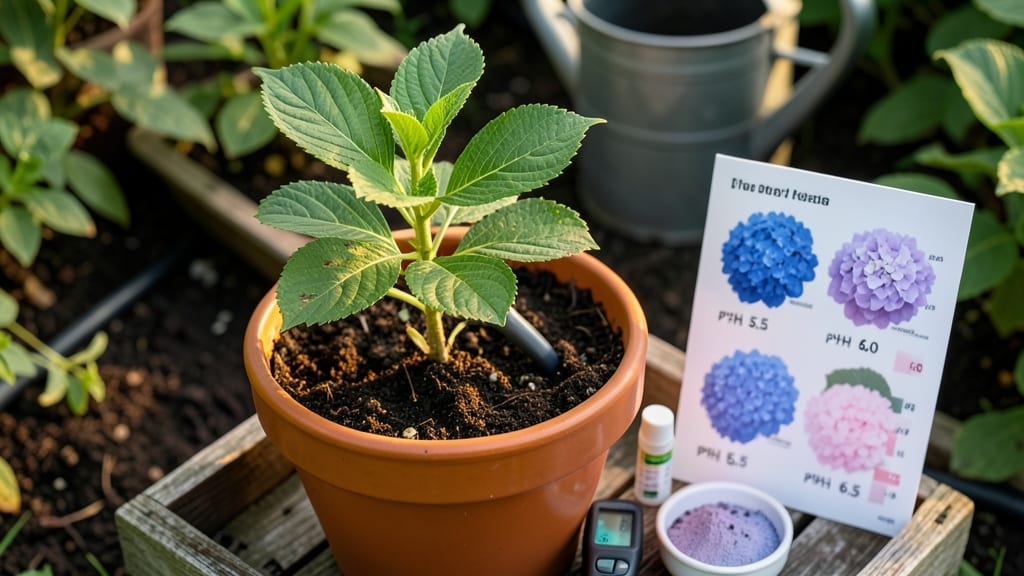
Hydrangea color changes dramatically with soil pH: acidic conditions (5.2–5.5) produce vibrant blues, neutral soil (6.0–6.2) yields soft purples, and alkaline soil (6.5–7.0) creates pink blooms. Annual soil testing lets you fine-tune colors using sulfur or lime.
This isn't just about aesthetics—pH directly alters the anthocyanin pigments in hydrangea petals. 🌸 At lower pH levels, aluminum becomes more available, intensifying blue hues, while higher pH reduces this aluminum uptake, shifting colors toward pink.
Many gardeners discover their hydrangeas change color naturally over seasons because soil pH fluctuates with rainfall and organic matter decomposition. The key is testing your soil every spring to maintain consistent results.
For example, if your hydrangeas are showing up purple when you want blue, your soil might be hovering around neutral. Adding elemental sulfur (about 1/2 pound per 100 square feet) can lower pH by 1 point over a few months.
Conversely, if you're getting pink blooms when you prefer purple, dolomitic lime (about 1/4 pound per 100 square feet) can raise pH gradually. The effects take time—don't expect dramatic color changes in a single season.
💡 In This Article
- How Soil pH Chemically Alters Hydrangea Petal Pigments
- Step-by-Step pH Adjustment Guide for Hydrangeas
How soil pH chemically alters hydrangea petal pigments
Hydrangea petals contain anthocyanins, water-soluble pigments that shift color based on soil chemistry. These pigments exist in multiple forms (flavylium ions, quinonoidal bases), and pH determines which form dominates.
At acidic pH (5.2–5.5), hydrangeas produce deep blues because aluminum ions become more soluble, binding with anthocyanins to create a vivid hue. This is why blue hydrangeas often thrive in peat-based soils or areas with high organic matter decomposition.
The transformation happens at the molecular level: lower pH stabilizes the flavylium ion form of anthocyanins, which appears blue. As pH rises toward neutral (6.0–6.2), these ions convert to quinonoidal bases, creating purples.
At alkaline levels (6.5–7.0), the pigments shift toward pink due to structural changes in the anthocyanin molecules. 🌸 This isn't just color theory—it's a direct chemical reaction where hydrogen ions (H+) and aluminum (Al³⁺) availability dictate pigment stability.
Aluminum plays a crucial role: hydrangeas absorb this mineral more efficiently in acidic soils, where it forms complexes with anthocyanins. Without sufficient aluminum, even in acidic conditions, blue hues may appear dull. This explains why some gardeners see inconsistent colors—soil aluminum levels can vary dramatically based on local geology.
For example, granite-rich soils often contain more aluminum than limestone-based soils, which naturally limits blue development.
Another factor is flower acidity: hydrangea petals themselves have slightly acidic pH levels (around 5.5–6.0), which interacts with soil pH to create the final color. When soil pH matches petal acidity, colors appear most vibrant.
The process is reversible—changing soil chemistry one season can produce dramatically different blooms the next, as the plant responds to altered nutrient availability and pigment stability conditions.
Consider this practical example: A hydrangea growing in rainwater-fed soil (naturally acidic) will develop blue flowers, while one in dry, calcareous soil (alkaline) will turn pink. The difference isn't just aesthetic—it reflects fundamental changes in how the plant's biochemical pathways process aluminum and hydrogen ions.
This is why professional horticulturists recommend testing both soil pH and aluminum levels for precise color control.
What most gardeners overlook is that this chemical process affects more than just color: pH extremes can stress hydrangeas. For instance, soil below pH 5.0 becomes toxic due to aluminum buildup, while above pH 7.5 causes iron and manganese deficiencies.
The sweet spot for both vibrant colors and plant health typically falls between 5.2–6.5, where pigment chemistry and nutrient availability align optimally. 💫