
Light Requirements
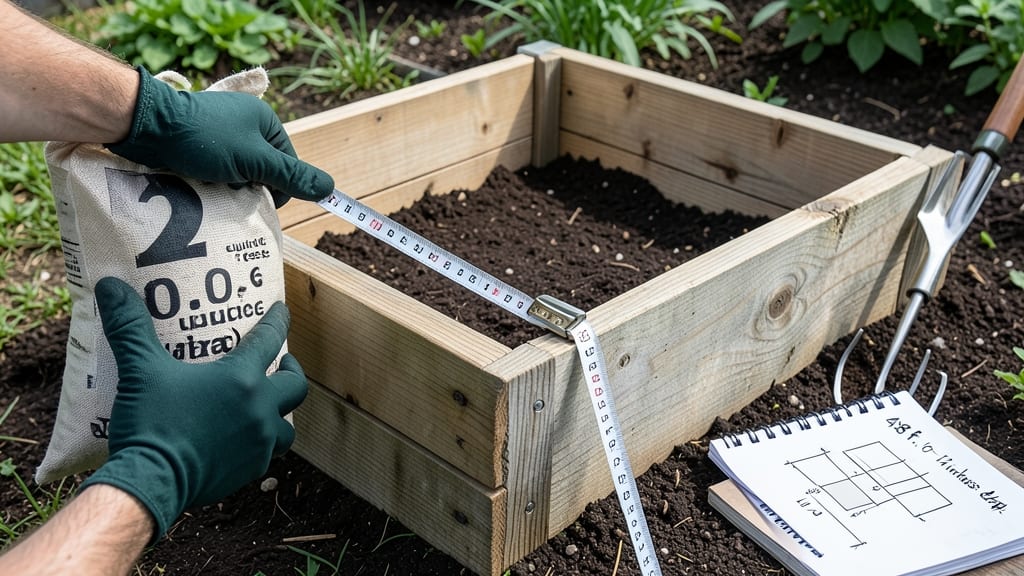
To calculate how much soil you need for a raised garden bed, multiply the bed’s length, width, and height (in feet), then divide by 27 to convert cubic feet to cubic yards. For example, a 4’x8’x12” bed requires 3.5 cubic feet of soil per inch of depth—always use a calculator for accurate results.
Raised garden beds are all about efficiency, and soil volume is where precision matters most. 🌱 The formula works because garden soil is typically sold by the cubic yard, so converting your bed’s dimensions into cubic feet (then dividing by 27) gives you the exact amount needed.
For instance, a 4’x8’x12” bed needs about 1.5 cubic yards of soil when filled to the top—double that for a 24” depth. Pro tip: account for any drainage layers or existing ground soil beneath your bed, as these reduce the total volume required.
Beyond the math, soil type makes a huge difference. Loamy soil blends—equal parts topsoil, compost, and perlite—work best for vegetables, while flower beds can handle slightly more sand for better drainage.
I always recommend testing your soil’s fertility first; amending with compost or aged manure ensures your plants thrive from day one. 💫
💡 In This Article
- Calculating Soil Volume for Raised Garden Beds
- Best Soil Types and Mixes for Raised Garden Beds
Calculating soil volume for raised garden beds
The cubic foot formula—length × width × height—works because it converts your bed’s physical dimensions into a measurable volume. For example, a 4’x8’x12” bed translates to 32 cubic feet (4 × 8 × 1 = 32), which equals 1.18 cubic yards (32 ÷ 27).
This math ensures you account for every inch of space, preventing under- or over-purchasing. 🔥 The key is consistency: always measure in feet and inches, then convert height to feet (e.g., 12” = 1’).
Depth matters more than you might think. A 12” bed fills quickly, but a 24” bed doubles the volume—so that same 4’x8’ bed jumps to 2.36 cubic yards. Deeper beds improve root growth for vegetables like tomatoes (which need 18-24” depth) but require heavier soil blends.
Pro tip: subtract any drainage layers (e.g., 4” of gravel) from your height measurement before calculating.
Existing ground soil complicates things. If your bed sits directly on grass or hardpan, you’ll need less fill soil—perhaps just 6-8” of new mix. But if it’s on bare ground, add 10-12” of soil to ensure roots penetrate easily.
I’ve seen gardeners skip this step and end up with compacted soil that restricts plant growth. Always dig a test hole to check soil quality before filling.
For irregular shapes, break the bed into rectangles. A 6’x4’ L-shaped bed (with a 2’x2’ notch) becomes two calculations: 6’x4’ = 24 sq ft and 2’x2’ = 4 sq ft, then multiply by depth.
Multiply the total square footage by height (in feet) to get cubic feet. This method works for curved or tiered beds too—just approximate the area first.
Soil settles over time, especially with organic mixes. A 12” bed might compact to 10” after watering, so add 10-20% extra soil to account for this.
I’ve learned this the hard way—underestimating settlement leads to bare spots mid-season. 💫 Use a tape measure to check depth after filling, then top off if needed.
Consider soil moisture too. Damp soil weighs more, so bags labeled "cubic yards" may feel heavier when wet. For accuracy, order 5-10% more than your calculation if your climate is humid. In dry areas, you might get away with the exact volume—but always confirm with your supplier about moisture content.
Finally, factor in amendments. If your mix includes 30% compost, the volume will shrink slightly as compost decomposes. For precise planting, calculate amendments separately: 1 cubic yard of soil typically needs 10-15 gallons of compost mixed in. This ensures your bed stays fertile without overloading with bulk soil.