
Light Requirements
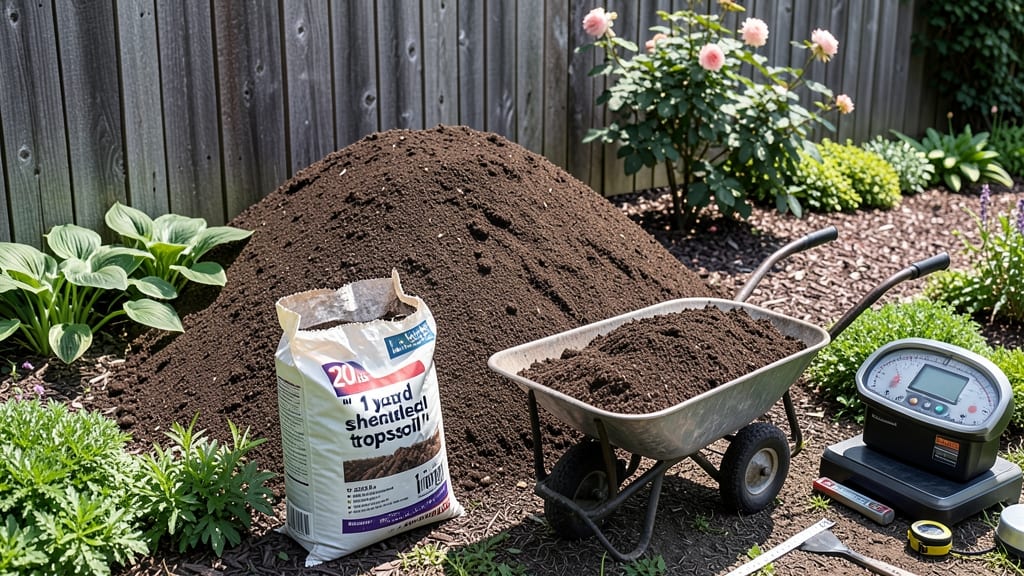
A yard of screened topsoil weighs 1,800 to 2,200 pounds when dry, but swells to 2,400 to 3,000 pounds when fully saturated with moisture due to water absorption and density shifts. Always verify with your supplier for precise calculations before ordering.
A yard of screened topsoil's weight shifts dramatically based on moisture levels—dry soil is significantly lighter than wet, which can double the load when fully saturated. 🌱 This variation matters most for heavy equipment operators or DIY landscapers transporting soil, as trucks often have strict weight limits.
For example, a 10-yard delivery could swing between 18,000 and 30,000 pounds depending on moisture content, so always ask suppliers about their current batch's water content before planning deliveries.
Beyond moisture, the organic matter percentage and soil composition play key roles.
Clay-heavy topsoil packs more densely than sandy loam, while decomposed compost or peat increases weight even when dry. Pro tip: If you're calculating for raised beds or containers, use the dry weight estimate—wet soil will compact over time, reducing the volume but not necessarily the weight.
Always overestimate by 10-15% to account for settling and moisture absorption during use.
💡 In This Article
- Factors Affecting Screened Topsoil Weight Variations
- Calculating Topsoil Needs for Landscaping Projects
Factors affecting screened topsoil weight variations
Moisture content is the single biggest factor in screened topsoil weight fluctuations. Dry topsoil has a porosity of 30-50%, meaning it contains air pockets that reduce density. When saturated, these voids fill with water, increasing weight by 20-40%.
For example, a yard of sandy loam might weigh 1,800 pounds dry but jump to 2,400 pounds after a heavy rain, while clay-based soils can absorb even more water due to their finer particle structure.
The organic matter percentage also plays a critical role. Topsoil with 5-10% organic content (like decomposed leaves or compost) weighs more than mineral-heavy soil because organic particles retain water and contribute additional mass.
Sandy soils, with 0-2% organic matter, typically weigh less (1,600-1,800 pounds dry), while loamy soils with 5-15% organic matter can reach 2,000-2,200 pounds dry. This variation explains why supplier samples may differ—some blend soils to achieve specific weight profiles for landscaping projects.
Compaction further complicates weight calculations. Loose, freshly screened topsoil settles 10-20% when spread, reducing volume but not necessarily weight. For instance, a 10-inch-deep layer in a 100-square-foot garden bed requires 6.94 cubic yards of loose soil, but after settling, the same bed might need 7.5 cubic yards.
This settling effect is why contractors often order 15-20% more soil than calculated to ensure full coverage after compaction.
Regional soil composition creates additional variations. Coastal areas often have lighter, sandy topsoil (1,600-1,800 pounds dry), while inland regions with glacial till or clay deposits can produce heavier soils (2,000-2,400 pounds dry).
For example, topsoil from the Midwest's loess deposits tends to be denser than Florida's sandy soils. Always check local supplier data—some regions even publish average soil density charts for agricultural planning.
Temperature also influences weight indirectly. Cold soils hold moisture differently than warm soils, affecting both density and weight. In winter, frozen topsoil can appear heavier due to ice crystals, while summer heat may cause moisture loss, reducing weight.
This seasonal variation is why professional landscapers recommend purchasing soil during spring or fall when moisture levels are more stable and predictable.
Finally, screening size matters. Finer screening (1/4-inch or smaller) creates a more compact, heavier soil because small particles pack tightly together. Coarser screening (1/2-inch or larger) produces lighter, looser soil with more air space.
If you're comparing suppliers, always ask for the screening size—the difference can mean 200-400 pounds per yard in weight variations.