
How To
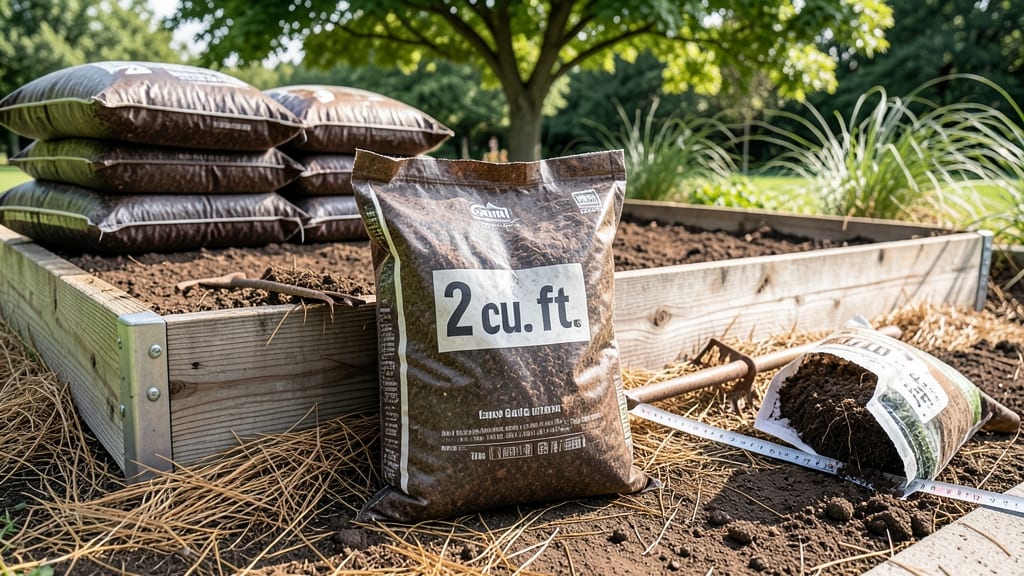
To fill a raised garden bed with soil, calculate the total cubic feet by multiplying length, width, and depth (in feet), then divide by the bag size. A typical 4’x8’x12” raised bed requires 20–24 cubic feet of soil, which translates to about 12–15 bags (2 cubic feet each). Remember to factor in soil settling and existing ground depth for precise measurements.
Understanding how many soil bags you need starts with knowing your bed's dimensions.
A common mistake is forgetting to convert depth from inches to feet—12 inches equals 1 foot, so a 12" deep bed is actually 1 foot in height. 🌱 For example, a 4’x8’x12” bed equals 32 cubic feet before accounting for soil settling (which reduces volume by about 20-30%).
Using pre-mixed raised bed soil blends can simplify calculations since they're designed to minimize compaction. I always recommend buying 10-20% more than your calculated amount to account for unexpected settling or topsoil adjustments.
Most gardeners choose between 2-cubic-foot and 4-cubic-foot bags—the smaller size offers better control for layering different soil types (like compost at the bottom). Bulk purchases save money but require proper storage and may not be ideal if you only need a few bags.
Pro tip: Check the bag's weight before buying—some brands pack less soil than advertised to reduce shipping costs.
💡 In This Article
- Calculating Raised Bed Soil Volume: Step-by-Step Math
- Best Soil Types and Bag Sizes for Raised Garden Beds
Calculating raised bed soil volume: step-by-step math
Let's break down the math behind soil volume calculations. First, convert all measurements to feet—this is critical because soil volume is measured in cubic feet. For example, a 4-foot long bed, 8-foot wide bed, and 12-inch deep bed converts to 4' × 8' × 1' (since 12" = 1').
Multiply these numbers: 4 × 8 × 1 = 32 cubic feet of raw volume before any adjustments. This is your starting point, but remember that loose soil settles as you add weight.
The real magic happens when accounting for soil settling—typically 20-30% of the initial volume. Using our 32 cubic feet example, subtract 25% (0.25 × 32 = 8 cubic feet), leaving you with about 24 cubic feet of usable soil.
This is why most guides suggest 12-15 bags (2 cubic feet each) for this bed size. Pro tip: Use a tape measure to verify your bed's internal dimensions—many kits list outer dimensions, but the usable space is often smaller due to framing thickness.
For irregularly shaped beds (like circular or kidney-shaped designs), divide the shape into geometric sections. For instance, a circular bed with 6-foot diameter and 12-inch depth would use the formula πr²h (π × 3² × 1 = ~90 cubic feet raw volume).
Always round up to the nearest whole bag—soil shortages are far more frustrating than slight overages. I've seen gardeners accidentally buy too few bags because they forgot to account for settling, leading to mid-project trips to the store.
Another key factor is the type of soil you're using. Potting mix settles less than topsoil (about 10-15%) because of its higher organic content, while pure topsoil can compact up to 35%.
If you're layering different soil types (like compost at the bottom), calculate each layer separately—compost typically occupies about 40% more volume than settled soil. For example, a 6-inch compost layer in a 4'x8' bed would need ~12 cubic feet of loose compost before settling.
Here's a practical example using common bed sizes:
- 4'x8'x12" bed: 24 cu ft settled → 12 bags (2 cu ft)
- 8'x4'x18" bed: 43 cu ft settled → 22 bags (2 cu ft)
- Custom 6'x3'x12" bed: 18 cu ft settled → 9 bags (2 cu ft)
Always verify your calculations by physically measuring your bed's interior space—what looks like a 4'x8' bed on paper might measure 3'x7' in reality after accounting for framing. This precision saves time, money, and prevents those mid-project "I need one more bag" moments. 🌱