
How To
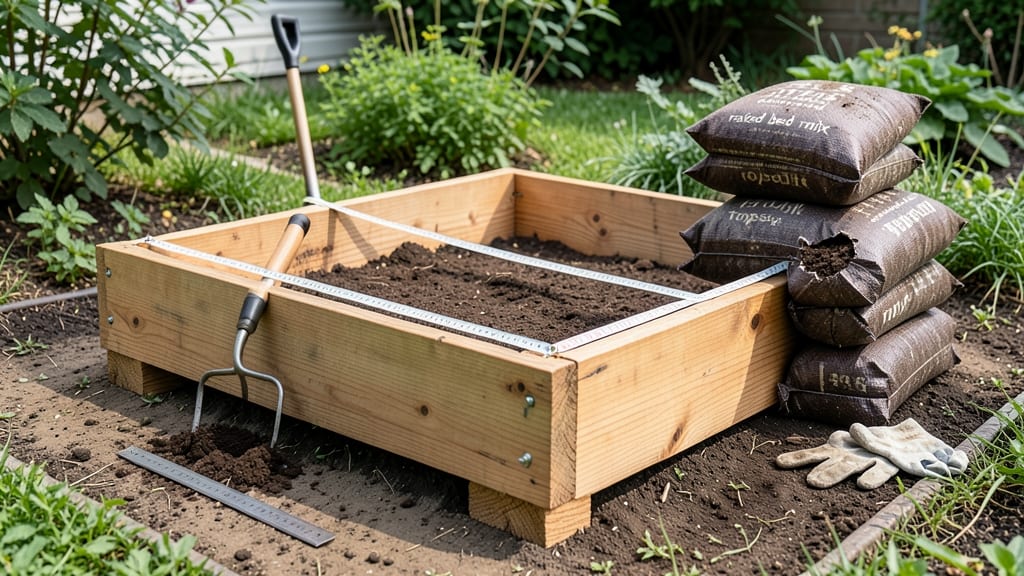
To determine how many bags of soil for a raised bed, multiply the bed's length × width × depth (in feet) to get cubic feet, then divide by 0.75 (accounting for soil settling). For instance, a 4×8 ft bed filled to 12 inches deep requires roughly 40 bags of standard 2-cubic-foot soil mix.
This formula works because soil settles about 25% after filling, so you'll need more volume than the bed's empty space suggests. Depth matters too—most vegetables thrive with 12-18 inches of soil, while root crops like carrots need deeper beds.
I always round up to the nearest whole bag to avoid running short, since partial bags can't be returned at most garden centers. For example, a 4×4 ft bed at 12 inches deep needs about 27 bags, but I'd buy 28 to account for settling and minor measurement variations. 🌱
Pro tip: Check the bag's cubic-foot rating—2-cubic-foot bags are standard, but some brands offer 4-cubic-foot bags that cut your shopping trips in half.
If you're planting heavy feeders like tomatoes, consider mixing in compost or aged manure to boost nutrient density, as standard potting mixes lack the organic matter vegetables crave.
💡 In This Article
- Calculating Soil Volume for Raised Garden Beds
- Choosing the Right Soil Mix for Your Raised Bed Plants
Calculating soil volume for raised garden beds
The cubic foot formula (length × width × depth) is your starting point, but here's what's actually happening: soil doesn't fill space like a rigid material. When you pour loose soil into a raised bed, it settles about 20-25% due to compaction from watering, root growth, and settling over time.
This is why we divide by 0.75—it accounts for this natural compression. For example, a 4×8 ft bed with 12-inch depth has 32 cubic feet of empty space, but you'll need 42.67 cubic feet of loose soil before settling. 🌱
Depth matters more than most gardeners realize. Most vegetables need 12-18 inches of soil for proper root development, while root crops like carrots or potatoes require 18-24 inches. Shallow beds (6-12 inches) work for herbs or shallow-rooted plants but risk poor drainage and nutrient depletion.
The formula works because deeper beds require proportionally more soil—adding just 6 more inches to our 4×8 ft example increases the total from 40 bags to 53 bags of standard 2-cubic-foot mix.
Here's a practical implication: always measure your bed's interior dimensions (not the frame's outer edges) and use those for calculations. Wooden frames often have 1-2 inches of thickness that reduce usable space. For instance, a 4×8 ft frame might actually hold only 3.5×7.5 ft of soil volume.
Round up to the nearest whole bag—partial bags are useless, and you'll thank yourself when your tomatoes aren't struggling in nutrient-poor soil. 💛
Consider these variations when calculating: Sandy soil settles more (30% loss) than loamy mixes, while peat-based mixes hold shape better (15% loss). If your bed has built-in drainage layers (like landscape fabric or gravel), subtract that thickness from your depth measurement.
For example, a 12-inch deep bed with 2 inches of drainage only needs 10 inches of soil mix. Always check bag labels—some "2-cubic-foot" bags actually contain 1.5 cubic feet after settling.
For visual reference, here's how common bed sizes translate to bags (using 2-cubic-foot bags and 12-inch depth): 4×4 ft = 27 bags, 4×8 ft = 40 bags, 8×8 ft = 80 bags.
A 4×12 ft bed jumps to 96 bags—that's why many gardeners opt for 4-cubic-foot bags to cut trips. The key is balancing accuracy with practicality: overestimating by 5-10% prevents last-minute store runs.
What most people don't realize is how soil moisture affects settling. Wet soil compacts 10-15% more than dry mix, so if you're filling in rainy weather, add an extra 5-10% to your total.
I've seen gardeners skimp and end up with 3-4 inches of exposed frame—unsightly and problematic for root crops. The solution? Layer soil in 3-inch lifts, watering each layer lightly before adding the next. This mimics natural soil formation and gives roots room to establish.