
Vegetables
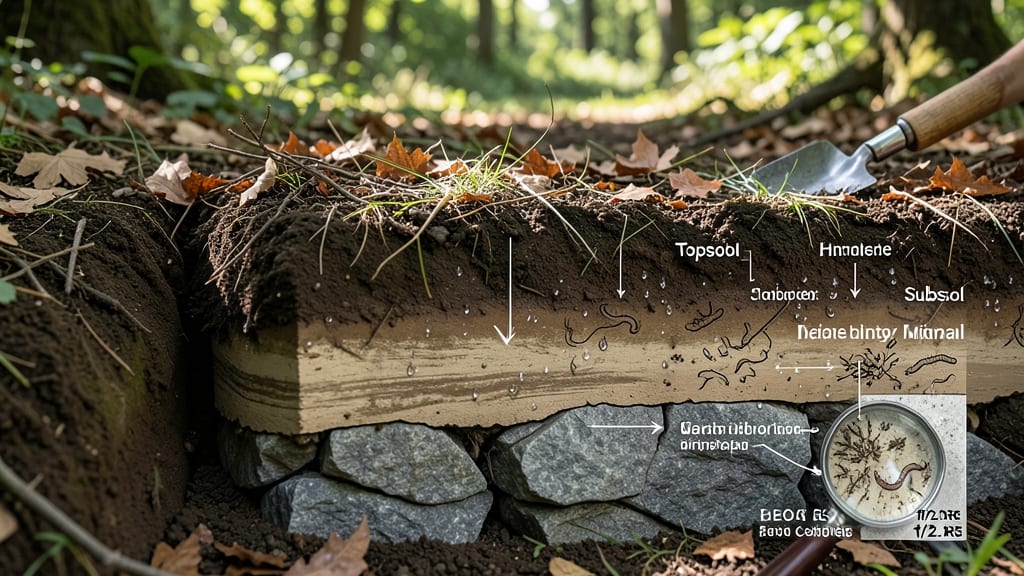
How topsoil is made involves centuries of natural processes where rocks break down, organic materials decompose, and living organisms like microbes and earthworms transform the uppermost soil layer into nutrient-rich earth perfect for growing plants.
This nutrient-rich layer develops through a combination of physical weathering—where rocks crack and fragment—and chemical breakdown from water, wind, and temperature changes. 🌱 Microorganisms play a crucial role by decomposing plant and animal matter, creating humus that improves soil structure and water retention.
The process also depends heavily on climate, as warmer regions with more rainfall accelerate decomposition compared to drier areas.
What's fascinating is how erosion and mineral deposits from nearby landscapes further enrich the soil. For example, river sediments often carry essential minerals that become part of the topsoil composition. Without these natural contributions, the soil would lack the balanced nutrients needed to support diverse plant life.
💡 In This Article
- Natural Topsoil Formation Process Explained
- Key Factors for Healthy Topsoil in Gardening
Natural topsoil formation process explained
The foundation of topsoil begins with parent material—rocks and minerals exposed to the elements. Physical weathering, like freeze-thaw cycles, causes rocks to crack into smaller fragments over centuries.
For example, granite exposed to 50-100 years of temperature fluctuations can break down into coarse sand, while chemical weathering from acidic rain dissolves minerals like quartz and feldspar, releasing essential nutrients like potassium and calcium. This process creates the mineral backbone that holds soil particles together.
Biological activity transforms these minerals into fertile earth. Microorganisms like bacteria and fungi decompose organic matter, breaking down complex compounds into simpler nutrients plants can absorb. Earthworms, often called "nature's plow," aerate the soil by tunneling, which improves water drainage and root penetration.
A single worm can process up to 500 pounds of soil annually, accelerating nutrient cycling. The result is humus—a dark, spongy material rich in organic carbon that enhances soil structure and water retention.
Climate plays a critical role in shaping topsoil. In tropical regions, warm temperatures and high rainfall accelerate decomposition, creating deep, nutrient-rich layers in just 50-100 years. Conversely, arid climates slow organic breakdown, leading to thinner, less fertile soils.
Erosion from wind or water further redistributes minerals, often depositing nutrient-rich sediments in floodplains. For instance, the Mississippi River deposits 400 million tons of sediment annually, enriching nearby farmlands.
What makes topsoil unique is its balance of organic and inorganic components. Organic matter contributes 5-10% of the soil's volume but holds 80-90% of its nutrients. Without this balance, soil becomes compacted or nutrient-poor, struggling to support plant life.
The interaction between these elements—physical breakdown, biological activity, and climate—creates the complex ecosystem we rely on for agriculture and ecosystems.
Consider this: a single teaspoon of healthy topsoil contains billions of microorganisms, miles of fungal filaments, and countless tiny creatures working together. This microscopic world is what gives topsoil its dark color, crumbly texture, and ability to retain moisture—qualities that make it indispensable for gardening and farming.
Without these living components, soil would be little more than lifeless rock fragments.
Understanding this process helps explain why topsoil is often called "the skin of the Earth"—it's a dynamic, living layer that takes centuries to form but can be lost in decades through poor land management. 🌱