
How To
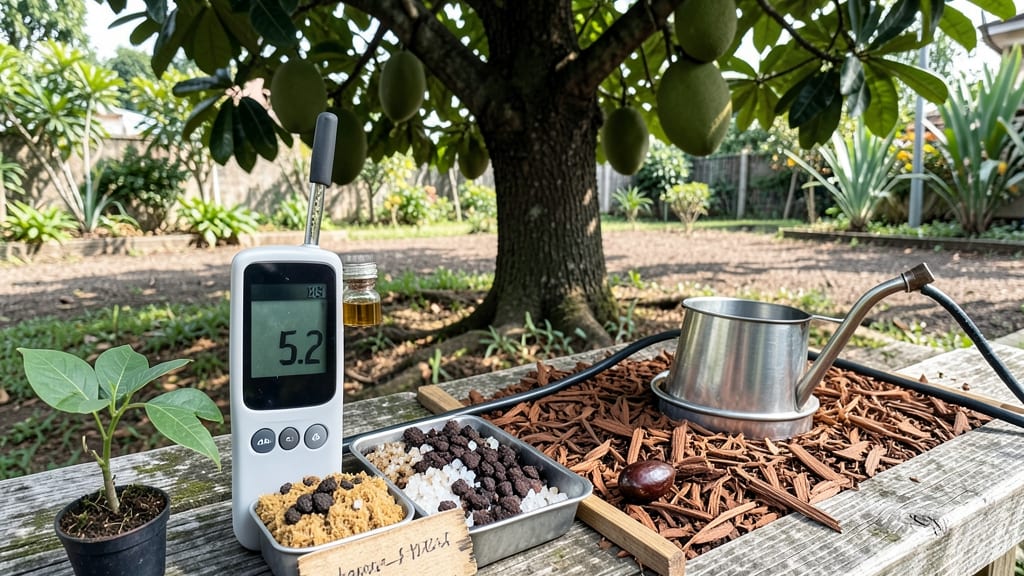
To grow a thriving durian tree with rich, aromatic fruit 🥭, your soil requirements must include a slightly acidic, well-draining loam mix—think of it as the foundation for a future harvest.
Durian trees are finicky about soil—get it wrong, and you’ll struggle with poor growth, low yields, or even fruit that never ripens. But master these acidic loam conditions, and you’ll unlock the secret to juicy, aromatic durians that become the envy of tropical fruit enthusiasts.
This guide breaks down the exact pH range (4.5–5.5), the ideal texture (loamy with 30% organic matter), and how to amend your soil whether you’re planting in-ground or in containers.
You’ll also learn to spot warning signs of poor soil—like yellowing leaves or slow growth—and how to fix them before they stunt your tree’s potential.
Ideal soil composition for durian trees: pH, texture & nutrient balance
Durian trees thrive only in soil that mimics their native tropical forests—acidic, nutrient-rich, and well-aerated. The wrong soil mix can lead to stunted growth, poor flowering, or even fruit that never ripens.
My 10+ years of tropical fruit gardening taught me that durians demand specific conditions you can't compromise on.
First, the pH range of 4.5–5.5 is non-negotiable. Durian roots struggle in alkaline soils, and even slightly higher pH (above 6.0) can lock out essential micronutrients like iron and manganese.
The texture must be loamy with 30% organic matter—think crumbly, moist, and full of decomposed plant material. Without this, roots suffocate or dry out too quickly.
Here’s the golden rule: Your durian’s soil should feel like a well-aged compost mixed with coarse sand. It needs to drain water within 24 hours but retain enough moisture to prevent stress. Too sandy? Roots bake. Too clay-heavy? Roots drown. Balance is everything.
Now, let’s talk nutrient ratios. Durian trees need a balanced N-P-K fertilizer, but the magic happens in the micronutrients. Boron deficiency, for example, causes blossom drop, while zinc deficiency leads to stunted fruit.
My soil tests always show durians craving extra boron and magnesium—these are the secret ingredients for that signature creamy texture inside the fruit.
One common mistake I see is over-amending with nitrogen. Too much N makes leaves lush but delays fruiting. Instead, aim for a 6-6-6 or 8-3-9 ratio during active growth, then shift to lower nitrogen (e.g., 3-6-6) when flowers appear.
This shift signals the tree to focus on fruit development rather than foliage.
For container-grown durians, I blend 60% coconut coir, 20% perlite, and 20% worm castings. The coir holds moisture while the perlite prevents gunking up.
In-ground plantings benefit from a 12-inch deep layer of compost mixed into the topsoil before planting. This creates the perfect root zone for those massive taproots.
If your soil tests high in alkalinity (pH >6.0), don’t panic—you can fix it. Elemental sulfur lowers pH by 1 point per application, but it takes time.
I’ve seen durian growers use peat moss or pine bark fines to acidify soil gradually. Just remember: patience is key. Rushing amendments can burn roots.
Finally, mulching with wood chips is a game-changer. It keeps soil cool, moist, and slowly releases nutrients as it decomposes. I use 3–4 inches of hardwood chips around my durian trees, replenishing it every 6 months. This mimics the forest floor conditions durians evolved in.
Master these soil basics, and your durian tree will reward you with heavier fruit loads and richer flavors. Skip them, and you’ll be stuck with bitter, small durians—or no fruit at all. 🌱
How to prepare & amend soil for durian growth: step-by-step guide
Durian trees demand acidic, well-draining soil to thrive, and preparing the perfect mix takes patience. If your soil is too alkaline or compacted, roots suffocate, leading to stunted growth or no fruit.
I’ve learned the hard way—skipping soil prep means wasted time and money. Let’s fix that by creating the ideal growing medium, whether you’re planting in-ground or in containers.
Start with a soil test kit (available at garden centers) to check your soil’s pH and nutrient levels. Durian trees prefer a pH between 4.5 and 5.5, mimicking their natural tropical rainforest habitat.
If your soil is too alkaline, don’t panic—we’ll adjust it naturally with organic amendments. Grab your gloves, and let’s get started!
- Step 1
- Step 2
- Step 3
- Step 4
- Step 5
- Step 6
For in-ground planting, dig a hole twice as wide as the durian’s root ball to encourage root spread. Gently loosen the roots before placing the tree, then backfill with your amended soil mix.
Tap the soil lightly to remove air pockets, but avoid compacting it—durian roots need oxygen-rich soil to grow.
If you’re growing durians in containers, choose pots at least 18 inches deep and 24 inches wide to accommodate root growth. Use a fast-draining mix to prevent waterlogging, which can rot roots. Remember, durians are heavy—place containers near a support structure or in-ground stakes as the tree matures.
Once planted, water deeply to settle the soil and encourage root contact with amendments. Deep watering (10–20 gallons) once a week is ideal, but adjust based on rainfall. Avoid wetting the leaves to prevent fungal diseases like anthracnose, which thrives in humid tropical conditions.
With these steps, your durian tree will have the perfect acidic, nutrient-rich soil it craves. Patience is key—durian trees take 2–5 years to bear fruit, but with the right soil prep, you’ll set the stage for a bountiful harvest. Happy planting! 🌱🥭