
Light Requirements
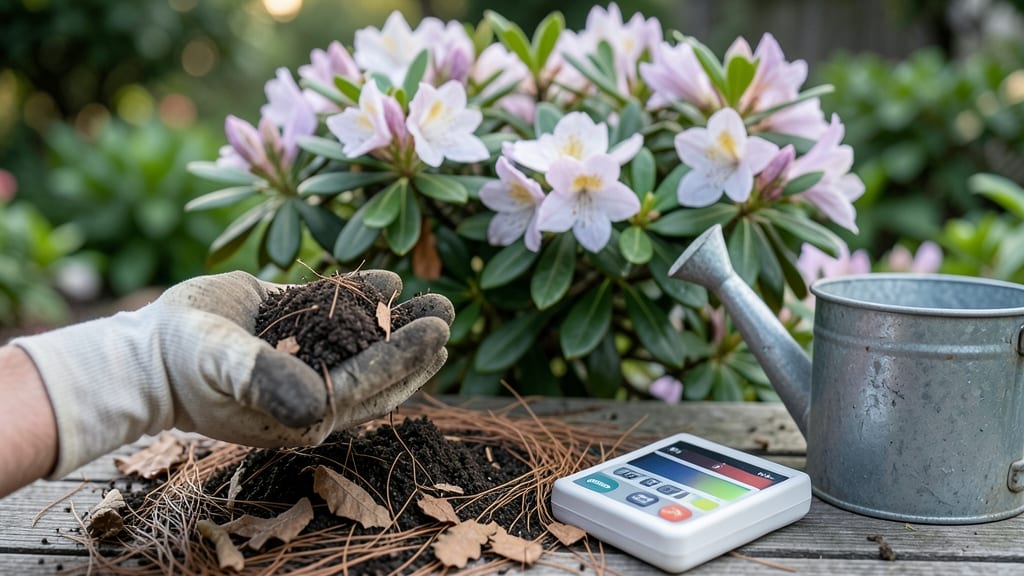
Azalea soil requirements demand a highly acidic pH between 4.5 and 6.0, rich organic matter like peat moss or pine bark, and excellent drainage to prevent root rot while retaining moisture. Amend clay or alkaline soils with sulfur or composted pine needles for optimal growth.
Azaleas thrive in soil that mimics their natural woodland habitat, where acidity unlocks essential nutrients like iron and manganese—critical for vibrant blooms and lush foliage. 🌿 Without this acidic environment, your plants may show yellowing leaves (chlorosis) or stunted growth, even if you're watering and fertilizing properly.
The organic matter in the soil also feeds beneficial microbes, which help break down nutrients into forms the azalea roots can absorb efficiently.
For container gardening, I blend equal parts peat moss, pine bark, and perlite to create a lightweight mix that drains well while holding moisture. In garden beds, work in 2-3 inches of composted pine needles or oak leaf mulch annually to maintain acidity and organic content.
Testing your soil's pH with a simple kit (available at garden centers) every spring lets you adjust with elemental sulfur or aluminum sulfate if needed.
💡 In This Article
- Why Acidic Soil Is Critical for Azalea Health
- DIY Azalea Soil Mix Recipes for Containers and Gardens
Why acidic soil is critical for azalea health
Azaleas belong to the Rhododendron family, which evolved in acidic forest floors where decomposed pine needles and leaf litter create the perfect pH 4.5-6.0 environment. This acidity isn't just a preference—it's essential for unlocking micronutrients like iron and manganese through a process called chelation.
In alkaline soils (pH 7.0+), these nutrients bind tightly to soil particles, becoming unavailable to plant roots. Without proper acidity, azaleas develop iron chlorosis, where leaves turn yellow between veins while remaining green at the edges—a classic sign of nutrient starvation.
The roots themselves play a crucial role in this ecosystem. Azalea roots secrete organic acids that further lower the soil pH around them, creating what's called a rhizosphere—a micro-environment tailored to their needs.
This acidic zone also suppresses harmful pathogens like Phytophthora, a fungus that thrives in neutral or alkaline conditions and causes root rot.
The organic matter in acidic soils feeds beneficial microbes that break down complex nutrients into forms azaleas can absorb, like ammonium (NH₄⁺) instead of nitrate (NO₃⁻), which alkaline soils favor.
Think of it like this: alkaline soil is like trying to drink through a straw that's been glued shut—nutrients are present but inaccessible. In acidic conditions, the "glue" dissolves, allowing roots to slurp up what they need.
For example, at pH 5.5, an azalea can absorb 30-50% more available iron than at pH 7.0. This is why even well-fertilized azaleas in the wrong soil may still struggle, despite your best efforts with water and nutrients. 🌱
Organic matter acts as both a nutrient reservoir and a pH buffer. Decomposing pine needles, for instance, release humic acids that maintain acidity while improving soil structure. The porous nature of organic-rich soil also holds moisture without suffocating roots—a delicate balance azaleas need to thrive.
Without this organic component, even perfectly acidic soil can become compacted, reducing oxygen flow to roots and inviting rot.
Here's what happens when you ignore these requirements: azaleas in alkaline soil may produce fewer blooms, develop weak stems, or become more susceptible to pests like lace bugs. The leaves might curl or drop prematurely, signaling stress.
In extreme cases, the plant's growth can stall completely, as it diverts energy away from blooming to survive in hostile conditions.
This is why professional growers often use elemental sulfur or aluminum sulfate—they're not just lowering pH, but actively creating the microbial and chemical environment azaleas evolved to depend on.
Consider this comparison: a pH 5.0 soil might contain 100 ppm available iron, while the same soil at pH 7.0 could have only 10 ppm—a tenfold difference in nutrient availability. That's why even a slight pH drift above 6.0 can trigger visible symptoms within weeks.
The key is maintaining that narrow 4.5-6.0 window year-round, especially during active growth in spring and summer when nutrient demands peak.
What most gardeners overlook is that azaleas aren't just picky—they're adapted. Their roots have specialized structures called mycorrhizae that form symbiotic relationships with soil fungi, enhancing nutrient uptake in acidic conditions. These beneficial fungi become less effective in neutral or alkaline soils, further reducing the plant's ability to thrive.
It's a perfect example of how evolution shapes plant requirements—azaleas didn't just happen to prefer acidic soil; they developed intricate biological mechanisms that depend on it. ✨