
Neem Oil
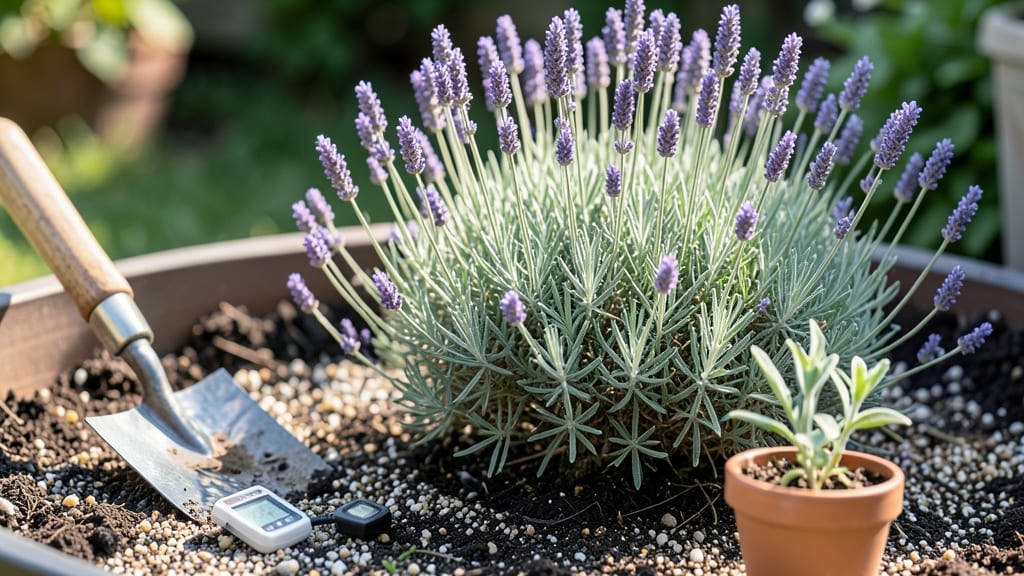
For growing lavender, the best soil is well-draining, sandy, and slightly alkaline (pH 6.5–7.5), with perlite or coarse sand added to prevent rot and improve airflow. Avoid dense clay or soggy mixes that choke the roots.
Lavender loves soil that mimics its Mediterranean roots—think gritty, airy, and slightly alkaline. 🌿 The sandy texture prevents waterlogging, while the alkaline pH (6.5–7.5) keeps fungal diseases at bay. I’ve found that adding coarse horticultural sand or perlite (20–30% of the mix) works wonders for drainage, especially in containers.
Even in-ground plantings benefit from amending heavy soil with composted bark or gravel to replicate its natural habitat.
Why does this matter? Lavender roots are shallow and sensitive to moisture—too much water leads to rot, while poor aeration stunts growth. The key is balance: enough organic matter (like peat-free compost) to feed the plant without compacting the soil.
If your garden soil is clay-heavy, consider raised beds or containers to give lavender the loose, fast-draining environment it craves.
💡 In This Article
- Why Lavender Thrives in Alkaline, Sandy Soil
- DIY Lavender Soil Mix Recipes for Containers and Gardens
Why lavender thrives in alkaline, sandy soil
Lavender's preference for alkaline, sandy soil boils down to survival in its native Mediterranean climate. The alkaline pH (6.5–7.5) is critical because it creates an environment where beneficial soil microbes thrive while suppressing harmful fungi like Phytophthora, which causes root rot.
In nature, lavender grows on limestone-rich soils that naturally maintain this pH range. When soil pH drops below 6.0, lavender becomes susceptible to fungal infections that attack its shallow root system.
The sandy texture of ideal lavender soil isn't just about drainage—it's about preventing root suffocation. Unlike heavy clay soils that compact when wet, sandy mixes allow both water and air to circulate freely around roots.
This is why lavender struggles in garden centers' typical potting mixes, which often contain 20-30% peat moss that holds moisture too long. The perfect sandy soil should feel like dry beach sand when squeezed—it should crumble immediately rather than forming a clump.
Organic matter plays a delicate role here. While lavender needs some nutrients, too much compost (especially fresh) can actually harm it by increasing soil fertility beyond what it tolerates. Instead, use composted bark or leaf mold (partially decomposed leaves) which adds structure without excessive nutrients.
Think of it as creating a soil that's 70% mineral (sand/gravel), 20% organic structure (bark), and only 10% nutrient-rich compost—this mimics the nutrient-poor but well-aerated soils of lavender's wild habitats.
Temperature also interacts with these soil properties. Sandy soils warm up faster in spring, which helps lavender's shallow roots establish quickly. The high mineral content (from ingredients like perlite or coarse sand) actually helps regulate soil temperature by absorbing and radiating heat more efficiently than organic-rich soils.
This is why lavender often thrives in full sun conditions (6+ hours daily)—the soil stays warm enough to support its growth cycle while preventing the waterlogging that would occur in cooler, denser soils.
What most gardeners miss is how these factors work together to prevent osmotic stress—when roots can't absorb water efficiently due to either too much salt (from poor drainage) or too little oxygen (from compacted soil).
In alkaline sandy mixes, lavender roots can access moisture and nutrients without expending energy to push through dense soil matrices. This energy efficiency is why lavender plants in ideal conditions can grow 2-3 feet tall in just one season—they're not struggling to survive, they're thriving.
For visual learners, imagine this: healthy lavender roots should look like a white, fibrous network spreading just beneath the surface, not thick, dark, and gnarled from water stress.
When you see these characteristics, you know your soil mix is hitting all the right notes—proper drainage, good aeration, and that perfect alkaline balance that keeps lavender happy and productive.