
Plants
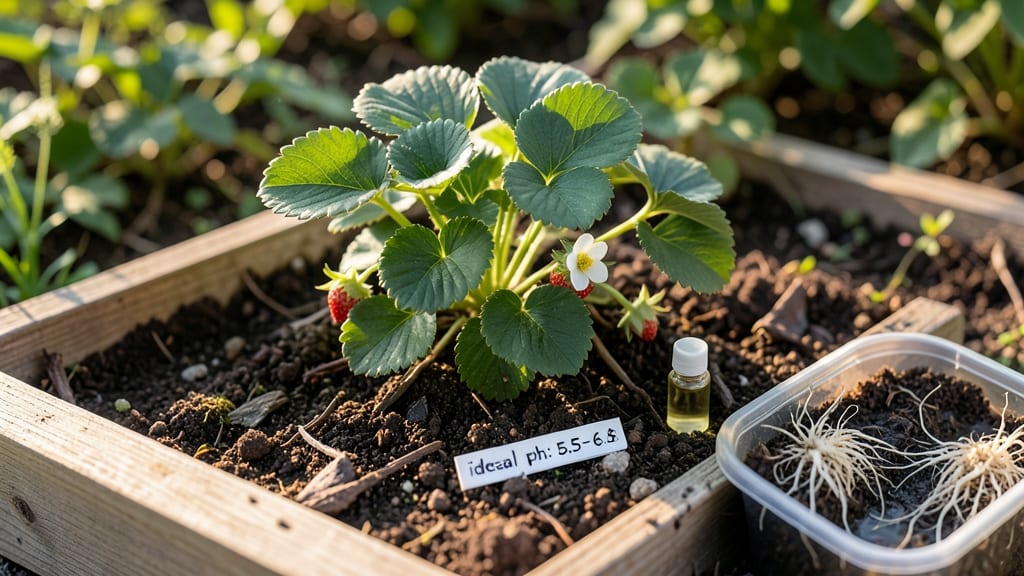
Strawberries love loose, well-draining soil packed with organic matter like compost or well-rotted manure, with a slightly acidic pH between 5.5 and 6.5. This combination ensures strong roots and prevents rot, while sandy loam or clay-loam blends keep moisture balanced without becoming waterlogged.
Strawberries aren't picky about luxury soil, but they do demand good drainage and nutrient availability. 🌱 The right mix—often a blend of 50% topsoil, 30% compost, and 20% perlite or sand—creates the perfect balance.
I've seen firsthand how strawberries planted in heavy clay soil struggle with root suffocation, while those in airy, organic-rich beds produce fruit all season long. For container growing, a lighter mix with coconut coir adds extra fluffiness to prevent compaction.
Testing your soil's pH is easier than you think—kits cost just a few dollars and take minutes. If your garden soil runs too alkaline (above 7.0), a sprinkle of sulfur or peat moss can help lower it gradually.
The goal is to mimic their natural habitat: slightly acidic, crumbly, and teeming with microbial life that breaks down nutrients into forms strawberry roots can absorb.
💡 In This Article
- Why pH and Soil Texture Matter for Strawberry Growth
- DIY Strawberry-Friendly Soil Mixes for Containers and Beds
Why pH and soil texture matter for strawberry growth
The slightly acidic pH range of 5.5-6.5 isn't just a number—it's the sweet spot where strawberries can access essential nutrients like phosphorus and iron.
At this pH, beneficial soil microbes thrive, breaking down organic matter into forms strawberry roots can absorb. 🌱 When soil becomes too alkaline (above 7.0), iron and manganese become locked away, causing yellowing leaves—a condition called chlorosis.
I've seen this firsthand in my own garden when forgotten lime applications pushed pH too high.
Soil texture determines how well water and air move through the root zone. Sandy loam (about 40% sand, 40% silt, 20% clay) provides the ideal balance—water drains quickly enough to prevent rot, but fine particles retain moisture and nutrients.
Pure sand drains too fast, while heavy clay holds water like a sponge, suffocating roots. Strawberries hate "wet feet," which is why raised beds with amended soil work so well—they create that perfect drainage while keeping roots cool during summer heat.
Organic matter like compost doesn't just feed plants—it transforms soil structure. A 5% increase in organic content can double water-holding capacity while improving aeration. This is why I always mix in at least 30% compost by volume when preparing strawberry beds.
The humus created by decomposed organic material acts like tiny sponges, holding nutrients near roots while preventing compaction. Without this, strawberries develop shallow root systems that struggle to support heavy fruit.
Texture also affects temperature regulation. Sandy soils warm up faster in spring, giving strawberries an earlier start, while clay holds heat longer. The ideal mix creates a microclimate where roots stay between 55-65°F—perfect for active growth.
I've noticed that container-grown strawberries in lighter mixes often bear fruit 2-3 weeks earlier than those in heavy garden soil, thanks to better temperature control and oxygen availability.
One often-overlooked factor is soil porosity—the air pockets between particles. Well-structured soil with 20-30% porosity allows oxygen to reach roots, which is crucial for root respiration. Compacted soil can reduce this to just 5-10%, causing roots to suffocate.
That's why I always add perlite or coarse sand (about 10-20% of the mix) to prevent compaction—it creates those vital air channels while maintaining drainage.
For container growers, texture becomes even more critical. A mix that's too dense will compact over time, while one that's too loose may dry out too quickly. The perfect container blend should hold moisture like a sponge but never feel soggy.
I've found that adding coconut coir (about 15%) helps maintain structure while improving water retention—it's like nature's moisture buffer system for strawberry roots.
Remember that soil isn't static—it changes with each season. Regular testing (every 2-3 years) and occasional amendments keep your strawberries thriving. The goal is to create a living ecosystem where roots can breathe, microbes can work, and nutrients flow freely—all while keeping those berries sweet and plentiful. 🌿