
Succulent
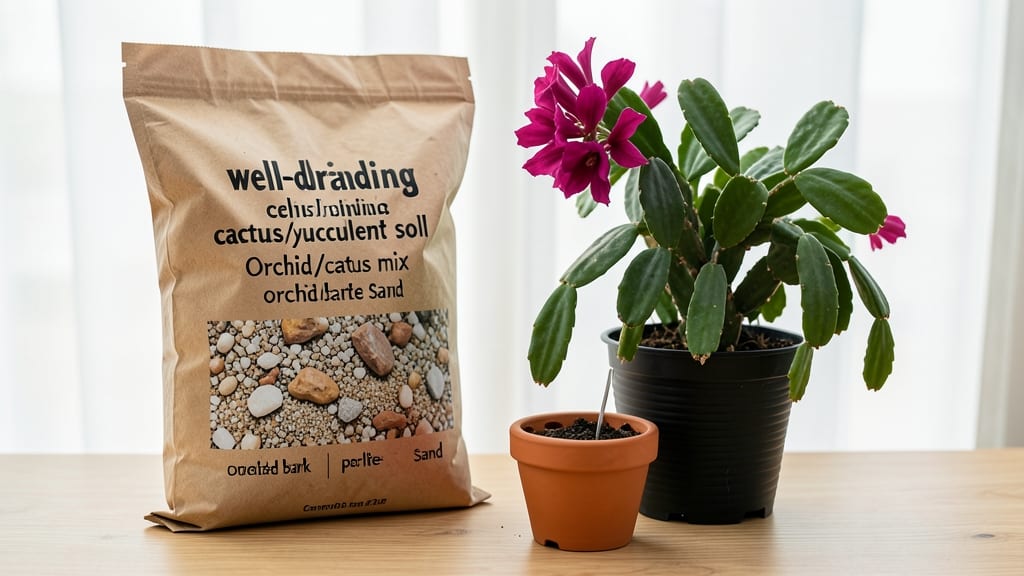
The kind of soil for a Christmas Cactus 🌸 must be lightweight, fast-draining, and slightly acidic to keep roots happy and blooms vibrant.
Picture this: your Christmas Cactus sits in a pot with heavy, waterlogged soil, its roots suffocating while the leaves yellow. That’s not just a sad plant—it’s a common soil mistake that stunts growth and kills blooms. The right mix changes everything.
Most gardeners reach for regular potting soil, but Christmas Cacti need something airier—think 60% peat or coconut coir, mixed with 30% cactus/succulent soil and 10% coarse sand or perlite. This blend prevents root rot while holding just enough moisture to support those stunning flowers.
Below, I’ll break down the exact ingredients, how to adjust for humidity, and even a simple DIY recipe to save money. By the end, your Christmas Cactus will thank you with longer blooms and healthier growth.
Ideal soil composition for Christmas cactus blooms
The Christmas cactus (Schlumbergera) thrives when its roots breathe easily—yet retains just enough moisture to stay hydrated. The perfect soil mix balances these needs with 60% organic matter (like peat or coconut coir) and 40% mineral components (perlite, sand, or pumice).
This combo prevents root rot while holding nutrients for vibrant blooms. Without this balance, your plant may wilt or drop buds prematurely.
Most gardeners overlook the air pockets in soil, but Christmas cacti need them to avoid soggy roots. A mix that’s too dense (like garden soil) suffocates roots, while too loose a blend (like pure sand) drains nutrients too fast.
The 60/30/10 ratio—60% peat/perlite, 30% cactus soil, and 10% coarse sand—strikes the ideal middle ground for this epiphytic plant.
| Soil Component | Purpose | Proportion |
|---|---|---|
| Peat Moss or Coconut Coir | Retains moisture, mimics epiphytic habitat | 30% |
| Perlite or Pumice | Prevents compaction, improves aeration | 30% |
| Cactus/Succulent Soil | Provides nutrients without density | 30% |
| Coarse Sand or Orchid Bark | Enhances drainage, mimics bark habitat | 10% |
For humid climates, reduce the sand proportion to 5% and increase peat to 65%—this helps retain moisture without causing rot. In dry climates, swap peat for orchid bark (20%) and add 5% extra perlite to prevent moisture loss.
Always test your mix: squeeze a handful—it should hold shape but crumble easily when pressed.
Never reuse old soil from your Christmas cactus—it compacts over time, losing its airy structure. Refresh the mix every 1-2 years or when you repot. If you’re repurposing containers, sterilize them with a 10% bleach solution to kill fungi or bacteria that could harm roots.
I’ve seen gardeners skip this step and end up with yellowing stems from hidden pathogens.
Your pH level matters too—aim for 5.5 to 6.5, slightly acidic. Test your mix with a soil kit; if it’s off, amend with lime (to raise pH) or sulfur (to lower pH).
Over time, organic matter like peat will naturally acidify the soil, so monitor it annually. A pH outside this range can lock out essential nutrients, causing weak growth or poor blooming.
When repotting, choose a container 1-2 inches wider than the current root ball—too large a pot holds excess moisture, inviting rot. Terracotta pots are ideal because they wick away moisture, but ensure they have drainage holes.
If using plastic, water less frequently since it retains moisture longer. I’ve had success with self-watering pots in dry climates, but always check soil moisture before adding water.
Add a thin layer of orchid bark on top of the soil to mimic the cactus’s natural epiphytic environment. This layer also slows evaporation in dry air and prevents soil splashes from damaging delicate stems.
For blooming season (late summer to fall), mix in 10% worm castings to boost nutrients without altering drainage. Avoid fresh manure—it’s too strong and can burn roots.
If your Christmas cactus develops mushy stems or yellow leaves, it’s a cry for help—likely from overwatering or poor drainage. Flush the soil with water to remove salts, then repot in fresh mix. For preventative care, water only when the top inch of soil is dry.
Stick your finger in the soil: if it’s damp past your first knuckle, wait another day. This simple habit saves countless plants from root rot.
With the right soil, your Christmas cactus will reward you with months of blooms and lush growth. Start with the 60/30/10 mix, adjust for your climate, and watch your plant thrive—no more sad, wilty stems or missed blooming seasons! 🌸
Common soil mistakes that stunt Christmas cactus growth
Your Christmas cactus might look healthy on top, but if the soil is wrong, its roots are silently suffocating. Overwatering in heavy clay soil or using garden mixes designed for veggies can block oxygen, leading to root rot and dropped buds.
Even well-meaning gardeners often make these soil mistakes that prevent blooms—let’s fix them before your next holiday display!
One of the biggest culprits is compacted soil. Clay or dense potting mixes trap moisture around roots, creating the perfect environment for fungal diseases. Without proper aeration, your Christmas cactus can’t absorb nutrients efficiently, causing stunted growth and fewer flowers.
The fix? Amend with orchid bark or perlite to create air pockets.
⚠️ callout warning ⚠️
Your Christmas cactus needs fast-draining, slightly acidic soil (pH 5.5-6.5). Avoid:
- 🚫 Garden soil (too dense, retains too much moisture)
- 🚫 Pure peat (holds water, suffocates roots)
- 🚫 Sand-heavy mixes (washes away nutrients)
Another common mistake is skipping organic matter. Without compost or worm castings, your soil lacks the nutrients your Christmas cactus needs to produce vibrant blooms. Even store-bought cactus mixes can become depleted over time.
Add a handful of worm castings or coco coir to refresh nutrients and improve moisture retention without compacting the soil.
If your Christmas cactus is potted in a mix that’s too alkaline, it can’t absorb iron or manganese—key nutrients for flower production. Test your soil’s pH (aim for 5.5-6.5) and adjust with sphagnum peat or pine bark fines to lower pH if needed.
A simple DIY fix: Add a teaspoon of vinegar to water once a month to gently acidify the mix.
Don’t overlook the drainage layer! Many gardeners forget to add a base of gravel or broken pottery at the bottom of pots. Without it, water pools at the roots, causing rot.
Use a pot with drainage holes and layer 1-2 inches of coarse sand or perlite before adding your soil mix. This simple step prevents 90% of root rot issues.
Finally, reusing old soil without amendments can lead to nutrient exhaustion. Every 1-2 years, refresh your Christmas cactus’s soil by repotting it into a new mix. Combine 50% fresh cactus soil, 30% perlite, and 20% orchid bark to revive growth.
This refreshes the medium and gives your plant the boost it needs for next year’s blooms!