
How To
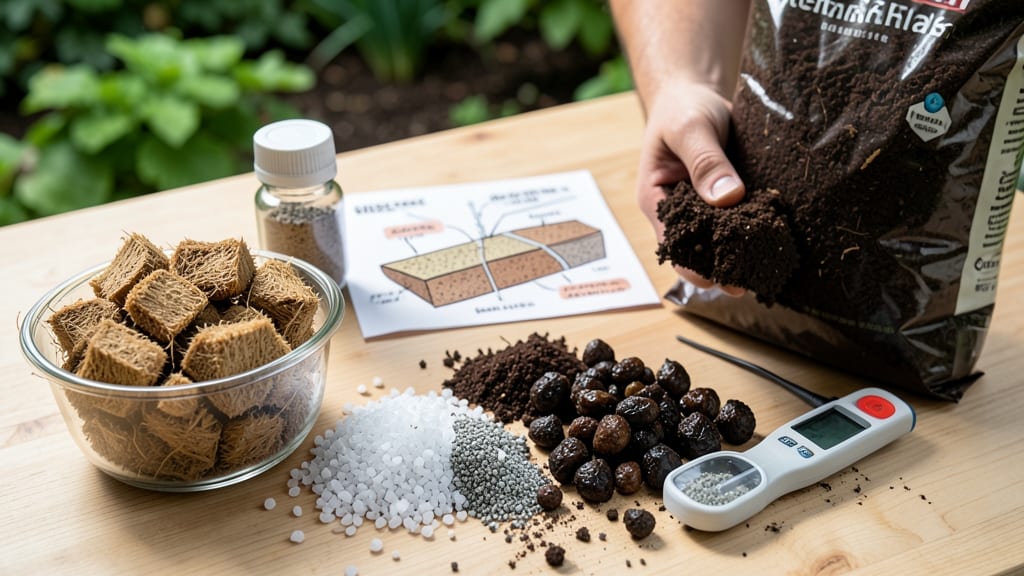
Potting soil is made of a balanced mix of organic matter like composted bark, peat moss, or coconut coir, inorganic materials such as perlite or vermiculite, and nutrients like sand or fertilizer to support root growth and moisture retention. Its texture ensures aeration while preventing compaction.
Potting soil isn't just dirt—it's a carefully engineered blend designed to mimic natural growing conditions while addressing the unique needs of container plants. 🌱 The organic components, like composted bark or coconut coir, act like a sponge, holding moisture and slowly releasing nutrients as they break down.
Meanwhile, inorganic additives such as perlite create air pockets that prevent root suffocation, while sand or fertilizer boosts nutrient availability. This combination ensures your plants get both hydration and oxygen, which is especially critical for houseplants that can't access deeper soil layers like their garden counterparts.
What's fascinating is how the science of soil texture plays into this. The right mix prevents compaction, which would otherwise smother roots and block water flow.
For example, a blend heavy on peat moss retains moisture longer but may need extra perlite for drainage, while cactus mixes prioritize gritty sand to mimic arid conditions. Understanding these ratios helps you customize soil for everything from delicate ferns to drought-resistant succulents.
💡 In This Article
- Key Components of Potting Soil and Their Functions
- Choosing the Right Potting Soil Mix for Different Plants
Key components of potting soil and their functions
The foundation of potting soil lies in its organic matter, which typically makes up 50-70% of the mix. Materials like composted bark or coconut coir act as moisture reservoirs, holding water near roots while slowly decomposing to release nutrients.
For instance, coconut coir absorbs up to 8 times its weight in water while maintaining excellent aeration—ideal for tropical plants like ferns or calatheas that thrive in consistently moist conditions. 🌿 The decomposition process also creates a porous structure, preventing soil compaction that could strangle roots.
Inorganic components like perlite or vermiculite play a critical role in aeration, making up about 10-30% of the mix. Perlite, a volcanic glass heated to create lightweight bubbles, adds air pockets that improve oxygen flow to roots—a key factor for plants like orchids that need excellent drainage.
Vermiculite, with its layered mineral structure, expands when wet to hold moisture while still allowing excess water to drain. Together, these materials create a textural balance that mimics natural forest floors, where organic matter and mineral particles coexist to support diverse plant life.
Nutrient boosters like sand or worm castings (up to 10-20% of the mix) provide essential minerals and microbial activity. Sand isn't just filler—its grain size determines drainage speed, with coarse sand ideal for succulents while fine sand helps retain moisture for seedlings.
Worm castings, meanwhile, introduce beneficial microbes that break down organic matter faster, creating a self-fertilizing environment. The science here is about nutrient timing: slow-release organics feed plants over months, while fast-acting fertilizers provide immediate growth boosts during active seasons.
What makes potting soil different from garden soil is its engineered porosity. Garden soil often compacts over time, reducing oxygen availability, but potting mixes include structural additives like rice hulls or charcoal to maintain loose, crumbly texture.
This is why a bag of potting soil might feel light and airy compared to heavy garden dirt—it's designed to stay fluffy even when wet.
The ideal mix achieves a moisture-to-air ratio of about 60:40, giving roots both hydration and oxygen, which is crucial for container plants that can't spread roots deeply to find resources.
Consider this breakdown for a typical all-purpose potting mix:
- Organic matter: 60% (composted bark, peat moss, coconut coir)
- Aeration agents: 20% (perlite, vermiculite, or rice hulls)
- Nutrient boosters: 10% (sand, worm castings, or slow-release fertilizer)
- Conditioners: 10% (charcoal for odor control, mycorrhizal fungi)
The magic happens at the micro-level where these components interact. Organic matter decomposes, releasing nutrients while its fibrous structure creates tiny channels for water and air movement. Inorganic particles prevent these channels from collapsing, maintaining the soil's open-cell structure.
This is why a well-made potting mix can support plants for months without needing frequent repotting—it's not just about what's in it, but how those ingredients work together to create a living root environment.