
Neem Oil
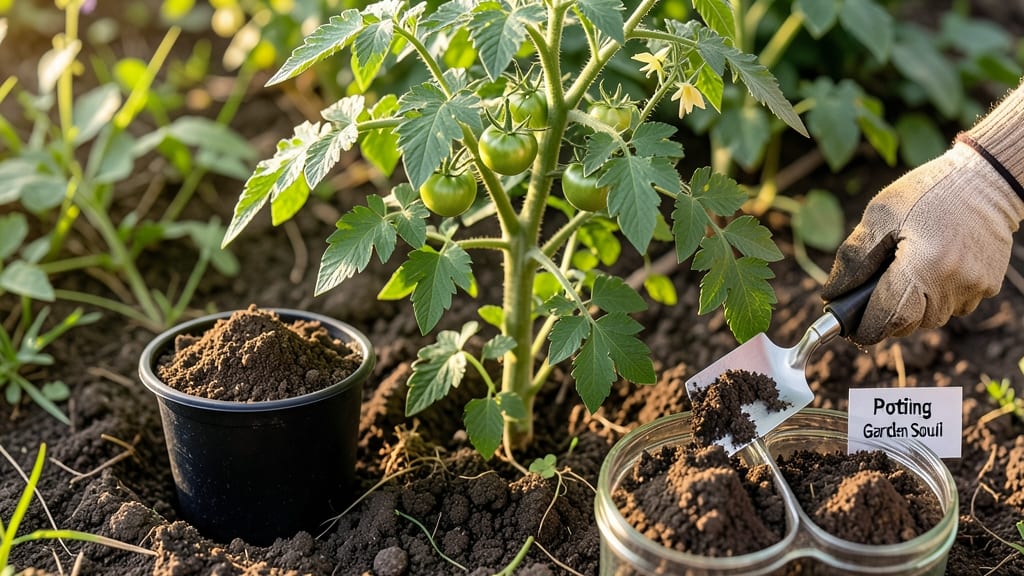
What happens if you use potting soil in the ground disrupts natural soil structure, causing poor drainage, compaction, and nutrient imbalance that stunts root growth and weakens plant health over time. Native soil microbes and texture are lost, leading to long-term garden issues.
When you mix potting soil into garden beds, you're essentially introducing an artificial environment that struggles to integrate with native ecosystems. 🌱 The lightweight, airy texture designed for containers creates pockets where water pools instead of draining properly, while synthetic additives like perlite break down too quickly.
Without the natural microbial communities present in garden soil, decomposition slows dramatically—leaving plants starved for nutrients despite the soil's initial richness.
This mismatch becomes especially problematic for deep-rooted perennials and trees, which need the stable structure of native soil to establish strong foundations. Even annuals may show signs of stress like yellowing leaves or stunted growth as their roots struggle to access moisture and minerals in the altered medium.
The good news? With the right amendments—like compost or coarse sand—you can adapt potting soil for garden use, but the process requires careful balancing to restore natural soil function.
💡 In This Article
- How Potting Soil Alters Soil Chemistry and Structure
- Fixing and Preventing Potting Soil Damage in Garden Beds
How potting soil alters soil chemistry and structure
Potting soil is engineered for containers, where its lightweight mix of peat moss, perlite, and vermiculite creates ideal drainage and aeration for root-bound plants. But when you spread it in garden beds, those same properties become liabilities.
The synthetic additives—like perlite—break down too quickly in open soil, losing their ability to maintain structure. Without the natural clay and silt particles found in garden soil, water drains too fast, leaving roots thirsty, or pools in clumps when mixed with native soil, creating anaerobic zones where roots suffocate.
Here's where soil chemistry gets tricky: potting soil often has a pH of 5.5-6.5 (slightly acidic), while most garden soils range from 6.0-7.5. This shift disrupts the delicate balance of native microbes that break down organic matter.
For example, earthworms—nature's plows—avoid potting soil because its texture lacks the fibrous structure they need to tunnel through. Without these helpers, organic matter decomposes 30-50% slower, leaving plants nutrient-starved despite the soil's initial richness.
The lack of microbial activity also means nitrogen becomes locked up in forms plants can't access, leading to stunted growth.
Consider what happens to your lawn when you spread potting soil: the surface becomes a spongy, uneven layer that compacts easily under foot traffic or rain. This creates a crust that blocks oxygen and water from reaching roots below. In containers, this wouldn't matter—roots stay confined in the pot.
But in garden beds, plants send roots 12-36 inches deep (depending on the species) searching for stability and nutrients they won't find in this artificial mix. The result? Plants develop shallow root systems that make them vulnerable to drought and wind damage.
What makes this worse is how potting soil's synthetic components interact with native soil. Perlite, for instance, expands when wet but collapses when dry—creating air pockets that trap moisture in some areas while leaving others bone-dry. This inconsistency stresses plants, especially during Florida's unpredictable rainy seasons.
Meanwhile, the lack of natural organic matter means the soil can't hold onto nutrients like calcium or magnesium, which leach away with heavy rains. Over time, this creates a nutrient desert where even fertilizers become less effective because the soil can't support microbial life to convert them into plant-available forms.
Think of it like trying to build a house on a foundation of packing peanuts: it might work temporarily, but without proper support, cracks will form and the structure will fail.
Similarly, potting soil provides a temporary boost to plant growth, but without the stable, living ecosystem of garden soil, roots can't establish properly. The visual signs—yellowing leaves, wilting despite regular watering, or plants toppling over—are your garden's way of screaming for help. 🌱
For a real-world example, imagine planting tomatoes in amended potting soil versus native soil. In potting mix, your tomatoes might produce a few fruits before struggling.
But in native soil, those same plants develop deep taproots that access water and nutrients throughout the growing season, resulting in 30-50% more yield with fewer pests. The difference comes down to soil structure: one supports life, while the other just fills space.