
Propagation
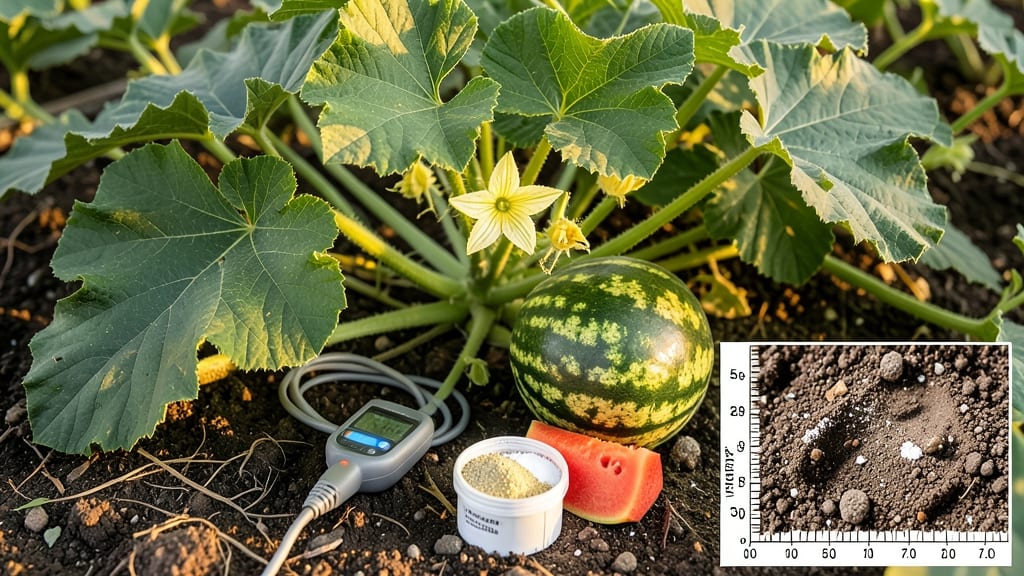
Growing juicy, sweet watermelons depends on one often-overlooked factor: the soil pH for watermelon plants must sit between 5.8 and 6.8 to unlock their full potential.
Struggling with small, bitter watermelons despite your best efforts? The secret might be hiding in your soil’s pH levels—getting this right can mean the difference between a meager harvest and explosively sweet, juicy fruits.
Most gardeners focus on watering and sunlight, but even the best soil can fail if the pH is off. Too acidic or alkaline, and your watermelon vines won’t absorb key nutrients like nitrogen or phosphorus, stunting growth and shrinking your harvest.
In this guide, I’ll walk you through how to test your soil’s pH, adjust it safely, and keep it in the perfect range for every stage of growth—from seedling to ripe, ready-to-eat 🍉.
Optimal soil pH for watermelon growth: exact ranges & how to test yours
If your watermelon plants are struggling to produce sweet, juicy fruits despite your best care, the culprit might be your soil pH. Watermelons thrive in soil with a slightly acidic to neutral pH range—any deviation can lead to stunted growth, poor fruit development, or even disease susceptibility.
Getting this right is the first step toward a bountiful harvest of those explosively sweet melons you’ve been dreaming of.
The ideal soil pH for watermelons falls between 5.8 and 6.8. This range ensures your plants can absorb essential nutrients like nitrogen, phosphorus, and potassium efficiently. Outside this window, nutrient deficiencies or toxicities can occur, directly impacting fruit quality and yield.
For example, soil that’s too acidic (<5.5) may cause iron or manganese toxicity, while overly alkaline soil (>7.0) can lock out critical nutrients like phosphorus and zinc.
Testing your soil’s pH is simpler than you think, and it doesn’t require expensive equipment. You can use DIY methods like vinegar or baking soda tests for a quick estimate, or invest in a digital pH meter or soil test kit for precise readings.
I’ll walk you through both approaches so you can choose what works best for your gardening style and budget.
Here’s the key takeaway: Watermelons are sensitive to pH fluctuations, especially during critical growth stages like flowering and fruiting. Even a slight shift outside the ideal range can lead to smaller fruits, bitter flavors, or poor pollination.
Let’s dive into the exact pH ranges you need, how to test your soil accurately, and what to do if your results fall outside the ideal zone.
Now that you know the ideal pH ranges for watermelon growth, let’s talk about how to test your soil accurately. The most reliable method is using a home soil test kit, which typically includes a probe or meter and color-coded results.
These kits are affordable (around $10–$20) and provide readings within minutes. For a more precise analysis, send a sample to your local cooperative extension service—they’ll test for pH, nutrient levels, and organic matter for a small fee.
If you prefer a DIY approach, try the vinegar and baking soda test. Mix 1 part vinegar with 1 part water and pour it over a soil sample. If it fizzes, your soil is alkaline (pH >7.0).
For an acidic test, mix 1 part baking soda with 1 part water and add a few drops of soil. If it fizzes, your soil is acidic (pH <6.0). While these tests aren’t as precise, they give you a quick idea of whether your soil needs adjustment.
Professional digital pH meters are another great option, offering instant readings with minimal effort. Look for meters with calibration features and replaceable probes to ensure accuracy over time. I recommend brands like Bluelab or Apera, which are widely trusted by gardeners for their reliability.
Remember to calibrate your meter using a buffer solution before each use to avoid inaccurate readings.
Once you’ve tested your soil and identified the pH, you’ll need to adjust it if it’s outside the 5.8–6.8 range.
For acidic soil (pH <5.8), add lime (calcium carbonate) or wood ash to raise the pH. If your soil is alkaline (pH >6.8), incorporate sulfur or peat moss to lower it. The key is to make gradual changes—overcorrecting can disrupt your soil’s microbial balance and harm your plants.
Don’t overlook
How to adjust soil pH for watermelons: step-by-step fixes for low or high pH
If your watermelon plants are struggling with stunted growth or poor fruit development, your soil’s pH balance might be the culprit. Watermelons thrive in a slightly acidic to neutral range of 5.8–6.8.
When pH strays outside this window, nutrient uptake suffers, leading to weak vines and bitter fruit. The good news? Adjusting your soil’s pH is straightforward with the right amendments and timing.
Before making changes, confirm your soil’s current pH using a home soil test kit or lab analysis. For low pH (acidic soil), you’ll need to raise it with lime or wood ash. For high pH (alkaline soil), sulfur or peat moss will help lower it.
The key is patience—soil pH adjustments take time, especially in clay-heavy soils. Let’s dive into the step-by-step fixes tailored for your watermelon patch.
🌱 Adjusting Soil pH for Watermelons: Pros & Cons
🔹 Raising pH (Acidic Soil)
- Pros: Quick results with lime (1-3 months). Improves nutrient availability.
- Cons: Overapplication can lock out essential nutrients like iron. Takes longer in sandy soils.
🔹 Lowering pH (Alkaline Soil)
- Pros: Sulfur is slow-acting, preventing sudden pH swings. Organic options like peat moss improve soil structure.
- Cons: Sulfur can harm soil microbes if overused. Results take 2-6 months.
🔹 Organic Amendments
- Pros: Improve long-term soil health. Peat moss and compost add organic matter.
- Cons: Slower to adjust pH. Requires regular reapplication.
🔹 Chemical Amendments
- Pros: Faster pH correction. Precise dosing for immediate results.
- Cons: Risk of overcorrection. Can disrupt soil microbial balance.
💡 Tip: Always test soil pH 2-3 weeks after amending to avoid over/under-correction.
For acidic soil (pH < 5.8), apply pelletized lime at a rate of 5–10 pounds per 100 square feet, depending on how much you need to raise the pH. Work the lime into the top 6–8 inches of soil 2–3 months before planting.
If you’re in a hurry, wood ash can provide a quick boost but use sparingly—1 pound per 100 sq ft max—to avoid making the soil too alkaline.
If your soil is alkaline (pH > 6.8), elemental sulfur is your best bet. Apply 1–2 pounds per 100 sq ft and mix it into the top 6 inches of soil. For organic gardeners, peat moss or pine needles can gradually lower pH over time.
Re-test your soil in 2–3 months to monitor progress, as sulfur can take longer to work in cooler climates.
Timing is critical—adjust pH 2–3 months before planting to allow amendments to fully integrate into the soil. Avoid adding lime or sulfur right before sowing seeds, as sudden pH shifts can stress young plants.
Instead, plan your soil prep in early spring or late fall for a watermelon harvest the following summer. Pair these adjustments with compost or well-rotted manure to improve soil structure and nutrient retention.
Long-term soil health is just as important as quick fixes. To prevent future pH swings, avoid over-fertilizing with synthetic products, which can acidify soil over time. Instead, use balanced organic fertilizers and mulch with straw or leaves to maintain stable conditions.
Regularly test your soil every 1–2 years, especially if you notice yellowing leaves or poor fruit set, as these can signal pH-related stress.
Remember, watermelons are forgiving, but they reward precise care. With the right pH adjustments, you’ll be on your way to growing juicy, sweet fruit that’s the envy of your neighborhood garden. Happy growing! 🌱