
How To
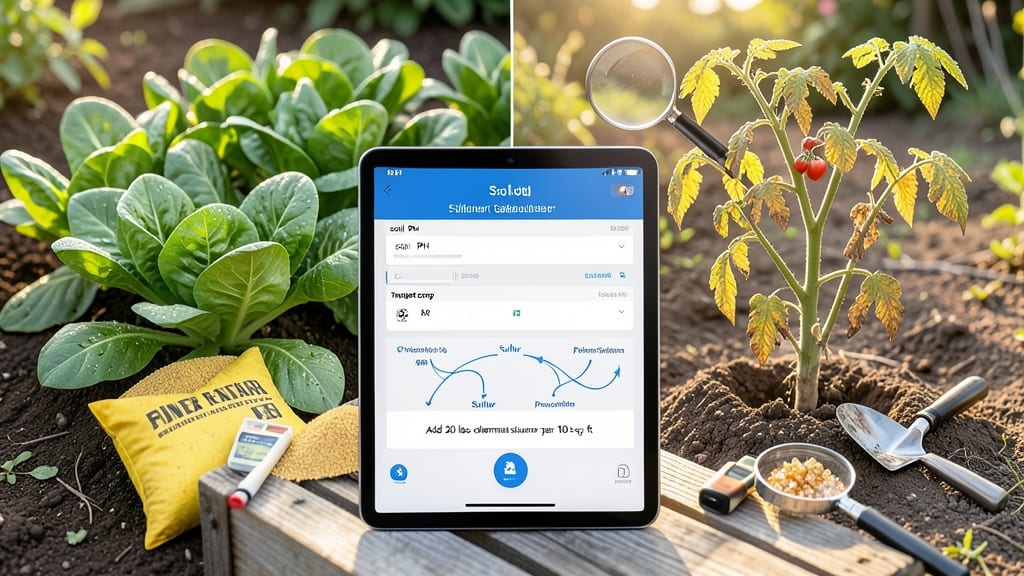
A soil sulfur calculator helps you calculate exact sulfur application rates by analyzing crop type, soil test results, and your target yield to avoid both deficiencies and toxic buildup in your soil. Simply enter your soil's pH, organic matter percentage, and sulfur content for tailored recommendations.
A soil sulfur calculator bridges the gap between raw soil data and practical farming decisions by accounting for how different crops metabolize sulfur. 🌱 For example, brassicas like broccoli need more sulfur than legumes because they convert it into amino acids for growth, while grasses use it primarily for protein synthesis.
The tool also factors in your soil's organic matter—higher organic content means more natural sulfur release over time, reducing the need for immediate applications.
What sets these calculators apart is their ability to adjust for regional conditions. If you're in an area with high rainfall, the tool may recommend slightly higher initial applications since sulfur leaches out faster.
Conversely, in dry climates, you might need less frequent top-ups because sulfur remains more stable in the soil profile. I've found that pairing calculator results with seasonal soil testing gives the most reliable outcomes.
💡 In This Article
- How Soil Sulfur Calculators Adjust for Crop Needs
- Step-by-Step Guide to Using a Soil Sulfur Calculator
How soil sulfur calculators adjust for crop needs
Soil sulfur calculators work by analyzing how different crops metabolize sulfur, which varies dramatically based on plant biology. Brassicas like broccoli and cabbage require 15-30 lbs of sulfur per acre annually because they convert sulfur into essential amino acids like cysteine and methionine—key building blocks for their structure.
In contrast, legumes such as soybeans need only 8-12 lbs per acre since their nitrogen-fixing bacteria reduce their sulfur demand. The calculator accounts for these differences by applying crop-specific coefficients that reflect each plant's sulfur uptake efficiency.
The role of organic matter in soil can't be overstated—it acts as a natural sulfur reservoir. Soils with 5% organic matter release about 20 lbs of sulfur per acre per year through mineralization, while soils with 1% organic matter release only 4-6 lbs.
This is why calculators often include an organic matter adjustment factor: higher organic content means the tool may recommend lower immediate sulfur applications, as the soil will gradually supply what's needed. 🌱 The calculator also factors in sulfur solubility, which drops dramatically below pH 6.5—making sulfur less available to plants in acidic soils.
What makes these tools particularly valuable is their ability to balance sulfur needs against potential toxicity risks. For instance, applying more than 50 lbs of sulfur per acre in a single season can create phytotoxic levels, especially in sensitive crops like onions.
The calculator prevents overapplication by cross-referencing soil test results with crop-specific thresholds. For example, a soil test showing 12 ppm available sulfur might trigger a "low-risk" recommendation for a cornfield, while the same level could signal "deficiency risk" for a canola crop.
Seasonal variations further complicate sulfur management. In wet climates, sulfur leaches out at a rate of 1-3 lbs per acre per inch of rainfall, while dry conditions can lock sulfur in place. Calculators adjust for these regional differences by incorporating rainfall data or irrigation schedules.
For example, a calculator might recommend 20 lbs of sulfur per acre in Florida's humid climate but only 10 lbs in Arizona's arid regions for the same crop, assuming identical soil tests.
Understanding these mechanisms helps explain why a one-size-fits-all approach fails. For example, applying sulfur based on a neighbor's fields—without accounting for your soil's organic matter or crop type—could lead to either deficiencies or toxic buildup. The calculator's precision comes from integrating these variables into a single, actionable recommendation.
This is why soil tests should always accompany calculator use: they provide the baseline data that the tool refines into practical application rates.
Consider the case of alfalfa, which requires 25-40 lbs of sulfur per acre but can tolerate higher levels than many crops.
A calculator would factor in your soil's current sulfur status (e.g., 8 ppm available sulfur) and recommend an application that tops up to 12-15 ppm, the optimal range for alfalfa. Without this adjustment, you might either under-fertilize (leading to stunted growth) or over-fertilize (causing leaf burn).
The calculator's crop-specific algorithms ensure you hit that sweet spot every time. 💫