
Shrubs
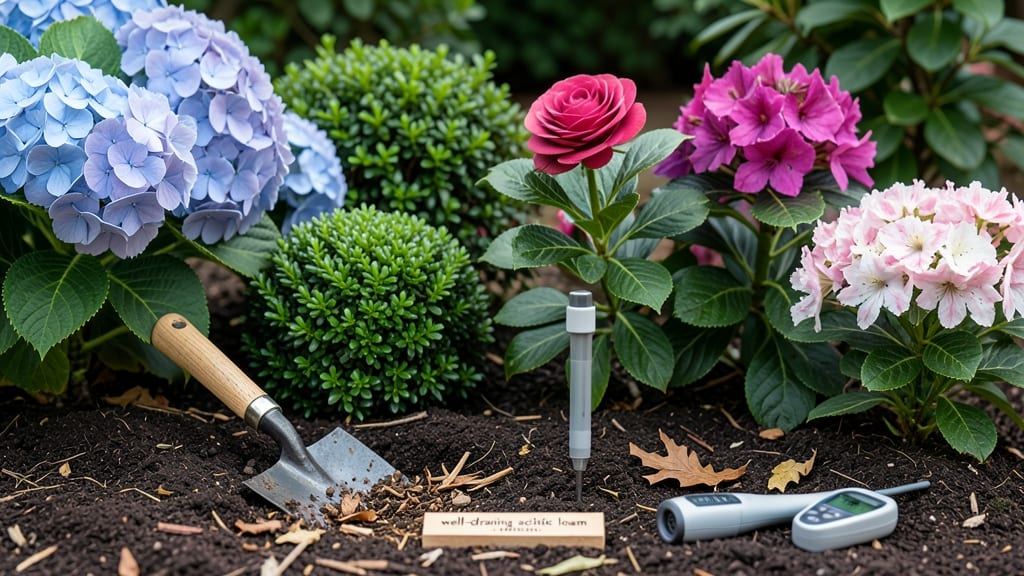
For healthy shrubs, your soil must drain well while maintaining a slightly acidic to neutral pH (6.0–7.0), packed with organic matter like compost or peat moss, and loosened with perlite or sand to prevent compaction. Avoid heavy clay or waterlogged soil to stop root rot.
Healthy shrubs thrive when their roots get the right balance of air, water, and nutrients—all controlled by soil composition. 🌱 The ideal mix prevents soggy roots while holding moisture just enough to support growth, especially in hot climates where evaporation is a problem.
Organic matter like compost acts like a sponge, slowly releasing nutrients, while perlite or sand creates tiny air pockets for oxygen flow. I've seen shrubs in heavy clay soil struggle with yellowing leaves and stunted growth, while those in amended soil burst with vibrant blooms.
Don't overlook the pH factor—too acidic or alkaline soil locks out essential nutrients like iron or phosphorus, causing leaf discoloration. Testing your soil's pH with a simple kit costs less than $10 and saves hours of guesswork.
For container shrubs, I recommend mixing equal parts potting soil, perlite, and compost to mimic ideal garden conditions, while in-ground plantings benefit from a 2-inch layer of mulch to regulate temperature and moisture.
💡 In This Article
- Why Shrub Soil Needs Proper Drainage and Aeration
- DIY Shrub Soil Mix Recipes for Different Climates
Why shrub soil needs proper drainage and aeration
Shrub roots need oxygen as much as they need water—poor drainage creates an anaerobic environment where roots suffocate. When soil compacts, tiny air pockets disappear, forcing roots to struggle for oxygen.
This is why sandy soils drain too fast (leaving roots parched) while clay holds water like a sponge (drowning roots). The ideal balance comes from a mix where 25-30% of the volume is pore space—half for air, half for water—created by organic matter and coarse amendments.
Organic matter like compost acts like a moisture reservoir, holding 3-5 times its weight in water while still allowing oxygen flow. Peat moss or coconut coir adds this sponge-like quality, while perlite or coarse sand creates larger air channels.
For example, a 1:1:1 mix of garden soil, compost, and perlite creates perfect conditions—roots get hydration without sitting in water, and beneficial microbes thrive in the oxygen-rich environment. 🌿 Without this balance, shrubs show stress signs like yellow leaves (iron deficiency) or wilting despite moist soil (root suffocation).
pH balance directly affects nutrient availability—shrubs need iron (pH 6.0-7.0) and calcium (pH 6.5-7.5) to be soluble. Too acidic (<6.0) locks out phosphorus, while alkaline (>7.5) makes iron unavailable. This is why azaleas (acid-lovers) thrive in pH 4.5-6.0 while boxwoods prefer 6.0-7.0.
A simple soil test reveals these imbalances before they cause stunted growth or leaf scorch.
Texture matters just as much as chemistry—sandy soils drain too fast (losing nutrients), while clay holds water but blocks roots. The solution? Amend with 20-30% organic matter to improve both drainage and water retention.
For example, adding 2 inches of compost to heavy clay doubles its drainage capacity while improving nutrient availability. This is why professional gardeners often call amended soil "the root's lifeline."
Seasonal changes also affect aeration—freezing winter soil compacts further, while summer heat dries out loose soil. Mulching with 2-3 inches of wood chips helps by insulating roots while preventing soil crusting.
In containers, I've seen shrubs thrive with a bottom layer of gravel (for drainage) topped with a 50/50 soil-perlite mix—this keeps roots oxygenated even in small spaces.
Think of shrub soil like a well-designed sponge: it absorbs water when needed but doesn't trap it, and it holds nutrients close to roots while allowing air to circulate. Without this balance, shrubs can't access the water and oxygen they need to grow—even with perfect sunlight and fertilizer. 💫