
How To
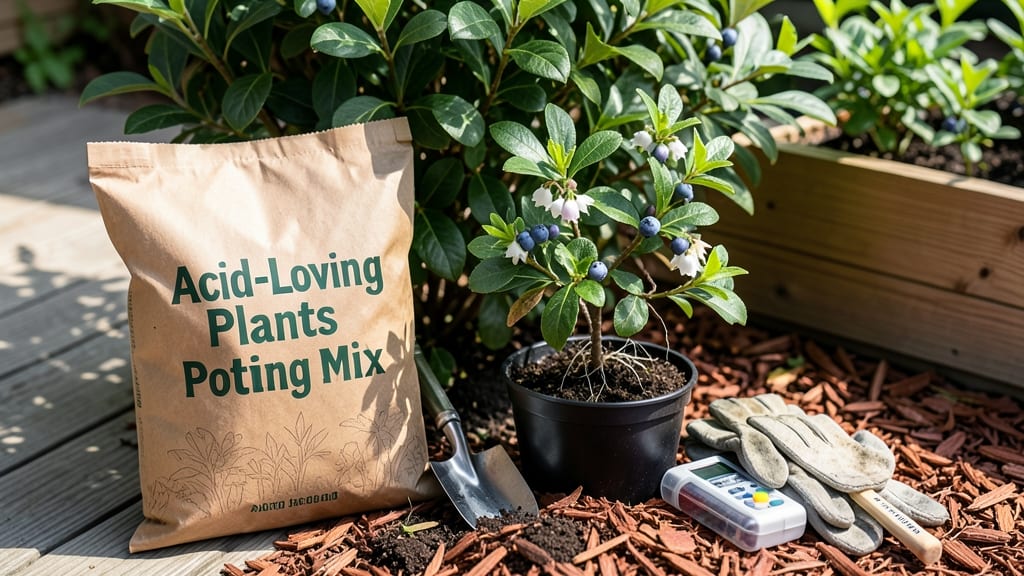
The right potting soil for blueberries needs to be so acidic it could make a chemist jealous—pH 4.5 to 5.5 is non-negotiable. 🌿 I learned the hard way when my first container plants turned bitter and stunted after just two years. The right mix isn’t just dirt—it’s a science of organic matter, drainage, and amendments that keep roots happy and berries sweet.
Most store-bought potting mixes fail because they’re too alkaline. Instead, blend 70% peat moss or pine bark (for acidity), 20% perlite or sand (for drainage), and 10% compost or worm castings (for nutrients).
Add a handful of sulfur if your soil tests above 5.5—it’s the secret weapon for dropping pH naturally. A 5-gallon container needs about 2-3 cubic feet of this mix, depending on the plant size.
Your blueberries will reward you with deep green foliage and juicy, vibrant berries by mid-summer if you nail the mix. The key is consistency: test pH every 3 months and top-dress with cottonseed meal in spring for a slow-release nitrogen boost.
Overwatering is the other silent killer—let the top inch dry before watering again.
This mix works for any container size, from 1-gallon pots for dwarf varieties to whirlpool barrels for full-sized bushes. The same principles apply whether you’re growing in full sun or partial shade—just adjust watering. Once you master the soil, you’ll never buy store-bought blueberries again.
📚 In This Guide
- What you need
- Instructions
- Tips and common mistakes
- Wrapping up and next steps
What you need
- ● Peat moss or coconut coir: 50% of the mix (2 parts) – holds moisture and acidifies the soil
- ● Pine bark fines or orchid bark: 25% (1 part) – improves drainage and aeration
- ● Perlite or vermiculite: 15% (3/4 part) – boosts drainage and root health
- ○ Sphagnum peat moss (optional but recommended): 10% (1/2 part) – enhances acidity and moisture retention
- ● Slow-release organic fertilizer (e.g., Osmocote or 10-10-10): 1 tsp per gallon of mix – provides balanced nutrients
- ● Lime-free compost or worm castings: 1 tbsp per gallon – adds organic matter without raising pH
- ○ Sulfur powder (optional): 1 tsp per gallon – adjusts acidity if needed (pH 4.5–5.5)
- ● Large mixing container or wheelbarrow (for blending)
- ● Garden gloves (to protect your hands)
- ● pH testing kit (to monitor acidity levels)
- ● Watering can or hose (for moistening the mix)
- ● Containers with drainage holes (if repotting immediately)
Step-by-Step guide to creating the perfect acidic potting mix for blueberries
Blueberries demand precise soil chemistry—here's how to craft an acidic blend that unlocks their full potential.
🌱 Step 1: Combine Base Materials for Optimal Drainage and Aeration
Start with 50% peat moss—this is your acidity anchor, keeping pH between 4.5 and 5.5, which blueberries crave. Mix it with 30% perlite to prevent compaction and ensure roots breathe freely. I sift both materials together in a large wheelbarrow to distribute them evenly. The peat moss should feel damp but not wet to the touch—if it's bone dry, lightly mist it before combining.
Add 20% coarse sand (not fine beach sand) to improve drainage. Blueberry roots rot quickly in soggy soil, and this gritty texture prevents waterlogging. Use your hands to work the sand into the peat-perlite mix until it looks uniformly speckled. Test your blend by squeezing a handful—it should hold shape but crumble easily when released.
🌿 Step 2: Boost Nutrient Retention With Organic Matter
Incorporate 10% composted pine bark fines—this adds bulk while maintaining acidity. I spread it over the mix and gently fold it in with a garden fork to avoid breaking up the larger peat fibers. Pine bark also mimics the natural forest floor conditions blueberries evolved in. If your bark feels too coarse, break it down further with your hands before adding.
For an extra nutrient kick, stir in 1 tablespoon of sulfur per gallon of mix—this fine powder lowers pH further if needed. Work it in thoroughly, then let the blend sit for 24 hours before use. This resting period allows the sulfur to fully integrate and prevents pH spikes after watering. The mix should smell earthy, not sulfurous or chemical.
💧 Step 3: Test and Adjust pH Before Planting
Use a digital pH meter (not strips—they're unreliable) to test your mix. The reading should fall between 4.5 and 5.5. If it's above 5.5, sprinkle ½ teaspoon of aluminum sulfate per gallon and remix. For readings below 4.0, add ¼ teaspoon of garden lime per gallon (yes, lime—it's the garden variety, not dolomitic). Re-test after adjustments and let sit another 24 hours before planting.
Fill your 4-gallon containers (one per plant) with the mix, leaving 1 inch of space at the top for mulch. Tap the containers gently on the ground to settle the soil without compacting it. Blueberry roots are shallow but extensive—this loose structure encourages them to spread horizontally. Water the mix until it's evenly moist but not dripping, then let it sit for 30 minutes before planting.
✂️ Step 4: Maintain Soil Chemistry Year-Round
After planting, top-dress with ½ inch of sphagnum peat moss as mulch. This slow-release acidifier prevents pH drift from rainwater. Replenish the mulch every 3 months during growing season. I also fertilize with acid-loving plant food (like Miracle-Gro Azalea, Camellia & Rhododendron) every 6 weeks in spring and summer, always watering thoroughly after application.
Watch for yellowing leaves—this often signals pH creep above 6.0. If you see it, flush the soil with 2 inches of water to leach out excess minerals, then retest and adjust. Blueberries are finicky but rewarding; once you nail the acidity, you'll see darker green foliage and heavier berry sets within a season. The key is consistency—never let the pH wander outside that 4.5-5.5 window.
Tips & tricks for perfect blueberry potting mix
Blueberries thrive when their soil chemistry is just right—here's how to elevate your mix from good to exceptional.
Mixing Technique: When combining the 50% peat moss and 30% perlite in Step 1, use a large wheelbarrow or sturdy container to avoid spills. I find sifting both materials together through a quarter-inch mesh screen first creates an even distribution that prevents clumping. The goal is to mimic the airy, organic structure blueberries evolved in—think of it like fluffing a pillow rather than packing it down. This prevents compaction that would suffocate roots.
Acidity Adjustment: The 24-hour resting period after adding sulfur in Step 2 is non-negotiable for accurate pH readings. I've learned this the hard way—skipping it can lead to false readings that send your mix too acidic or not acidic enough. Place your mix in a sealed container during this time to prevent moisture loss, which could alter the pH. Think of it like letting a fine wine breathe—patience here pays off with perfect chemistry.
Visual pH Test: Before using your digital meter in Step 3, do a quick visual check: healthy blueberry soil should have a dark, almost blackish-brown hue. If your mix looks grayish or has white streaks, it's likely too alkaline. For a rough estimate, add a few drops of lemon juice to a small sample—if it fizzes vigorously, your mix is already too acidic and needs lime. This simple test saves time before investing in meter adjustments.
Container Preparation: When filling your 4-gallon containers in Step 3, don't settle the mix by pounding the containers. Instead, gently tap them on the ground 2-3 times per side—this prevents compaction while still allowing the soil to find its natural structure. I also recommend placing a small handful of coarse sand at the bottom of each container first to create a drainage layer that prevents waterlogging from the start.
Pro Tips for Potting Soil For Blueberries
- Blueberries thrive when their soil chemistry is just right—here's how to elevate your mix from good to exceptional.
- Mixing Technique: When combining the 50% peat moss and 30% perlite in Step 1, use a large wheelbarrow or sturdy conta...
- Acidity Adjustment: The 24-hour resting period after adding sulfur in Step 2 is non-negotiable for accurate pH readin...
Frequently asked questions
Got questions about the perfect potting mix for your blueberries? You’re not alone! Here are answers to the most common queries to help you grow thriving bushes with ease.
What’s the ideal pH range for blueberry potting soil?
Blueberries thrive in acidic soil with a pH between 4.5 and 5.5. Test your mix with a pH meter or kit—if it’s too high, amend with elemental sulfur or peat moss to lower it. Learn more about adjusting pH naturally.
How often should I repot blueberries in their acidic mix?
Repot every 2–3 years or when roots crowd the container. Spring is the best time—avoid disturbing roots during fruiting season. Use a slightly larger pot (just 1–2 inches wider) to prevent stress. Pro tip: Add fresh potting soil to the top yearly to refresh nutrients!
Can I make blueberry potting soil at home instead of buying a pre-mixed blend?
A DIY mix works great: combine 50% peat moss or coconut coir, 30% pine bark fines, and 20% perlite or sand for drainage. Add a handful of composted pine needles for extra acidity. Store-bought blends (like Fafard Blueberry Mix) are convenient but pricier.
Why are my blueberries not fruiting even though I’m using acidic soil?
Fruiting issues often stem from lack of sunlight (6+ hours daily), inconsistent watering, or nutrient deficiencies. Check for yellow leaves (nitrogen deficiency) or brown tips (overwatering). Fertilize with an acid-loving plant food in early spring and after harvest.
Does potting soil for blueberries need to stay wet, or should I let it dry out?
Blueberries prefer consistently moist (not soggy!) soil. Water when the top inch feels dry—aim for 1–1.5 inches of water per week. Use a pot with drainage holes and a saucer to prevent root rot. Mulch with pine straw to retain moisture and acidity.
Wrapping up and next steps
Choosing the right potting soil for blueberries is the secret to thriving plants and juicy harvests! 🌱 With the perfect acidic blend—rich in organic matter, peat moss, and perlite—you’re setting your blueberries up for success.
Don’t let soil stress hold you back; experiment with amendments like pine bark or sulfur to fine-tune the pH and watch your berries flourish.
Ready to take the next step? Grab your supplies, mix that soil, and plant with confidence! Your future blueberry bush (and your taste buds) will thank you. 💙