
How To
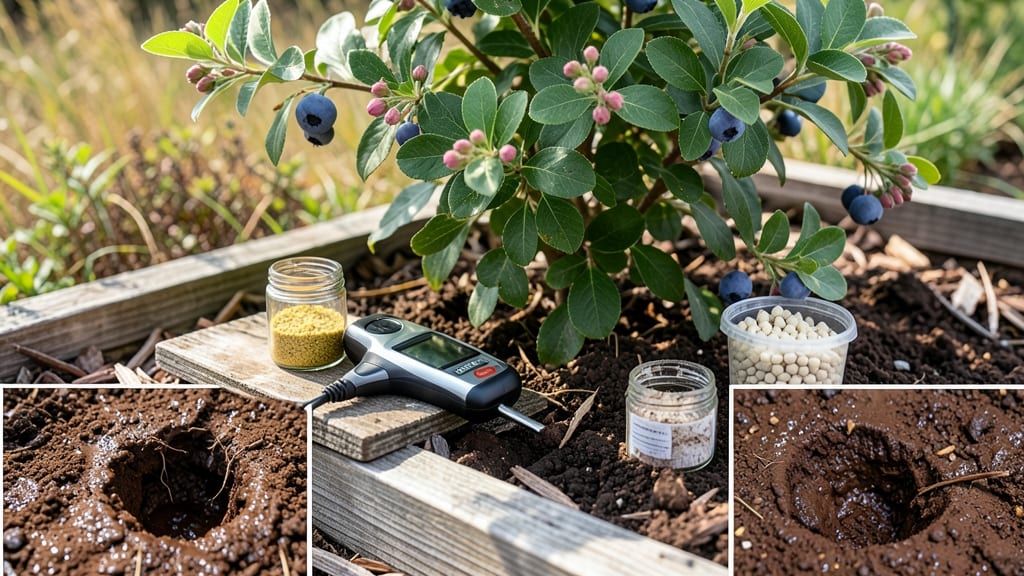
Clay soil is typically neutral to slightly alkaline, with a pH range of 6.6 to 8.5, though its heavy texture can create localized acidic spots where organic matter breaks down. Amending with compost and organic materials helps balance pH and improve drainage for healthier plant growth.
Clay soil's pH isn't one-size-fits-all—it shifts based on mineral content, water retention, and organic breakdown. 🌱 The alkaline lean comes from minerals like calcium and magnesium, but poor drainage traps organic acids in pockets, creating micro-zones that may drop pH below 6.0.
This is why testing your soil's pH in multiple spots gives a clearer picture than assuming it's uniformly alkaline.
For gardeners, this means you can't just add lime to fix everything. Instead, focus on improving drainage first—adding coarse sand or gypsum helps break up compaction while organic matter like compost buffers pH swings naturally.
Plants like hydrangeas (which change color with pH) become your best pH indicators in clay soil!
💡 In This Article
- How Clay Soil pH Varies by Region and Composition
- Best Plants for Clay Soil and pH Adjustment Tips
How clay soil pH varies by region and composition
Clay soil's pH balance isn't static—it shifts dramatically based on its mineral makeup and where it formed. The alkaline tendency (pH 6.6-8.5) comes from high concentrations of calcium carbonate and magnesium, which are common in sedimentary rock regions like the Midwest or parts of Europe.
For example, soils derived from limestone parent rock often test at pH 7.5-8.2 due to these minerals dissolving slowly over centuries. 🌿 In contrast, clay soils formed from volcanic ash (like in parts of the Pacific Northwest) may start more neutral or even slightly acidic until organic matter decomposes.
The real pH wild card is water retention. Clay's dense structure traps moisture, creating anaerobic pockets where organic matter decomposes anaerobically—producing acidic byproducts like acetic acid. These micro-zones can drop pH to 5.5-6.0 even while the bulk soil remains alkaline.
Think of it like a sponge soaked in lemon juice: the surface stays damp but the center stays dry. This is why you might see blue hydrangeas (acid-loving) thriving next to yellow ones (alkaline-tolerant) in the same clay garden!
Climate plays a surprising role too. In humid regions, constant rainfall leaches alkaline minerals faster, gradually lowering pH over decades. Meanwhile, arid climates preserve those minerals, keeping soils more alkaline.
For instance, California's clay soils often test at pH 7.0-8.0 due to minimal leaching, while Florida's clay can fluctuate between 6.0-7.5 because of frequent rain and organic buildup. The key is that clay's pH isn't just about the soil itself—it's a dynamic interplay between minerals, water, and microbial activity.
Here's what's actually happening at the particle level: Clay minerals like illite and montmorillonite have negative charges that attract positively charged ions (calcium, magnesium). These ions buffer pH swings, making clay more resistant to sudden acidification than sandy soils.
However, when organic acids from decomposing leaves or roots overwhelm this buffering capacity, localized pH drops occur. This is why adding 2-3 inches of compost annually can stabilize pH by providing a steady supply of organic matter that decomposes aerobically.
For gardeners, this means testing isn't just about picking a spot—it's about understanding patterns. Take soil samples from both the surface (0-6 inches) and subsoil (6-12 inches). You might find surface pH at 7.2 but subsoil at 6.8 due to different mineral compositions.
The difference can influence root growth patterns, with some plants like carrots struggling in the more acidic subsoil while others like beans thrive. 🌱
One common misconception is that all clay soils are uniformly alkaline. In reality, the pH can vary by 1.5-2.0 points across just a few feet in your garden. This variability explains why some plants flourish while others fail—even when using the same soil amendments.
The solution? Test multiple spots and amend in layers rather than assuming homogeneity.