
Planting
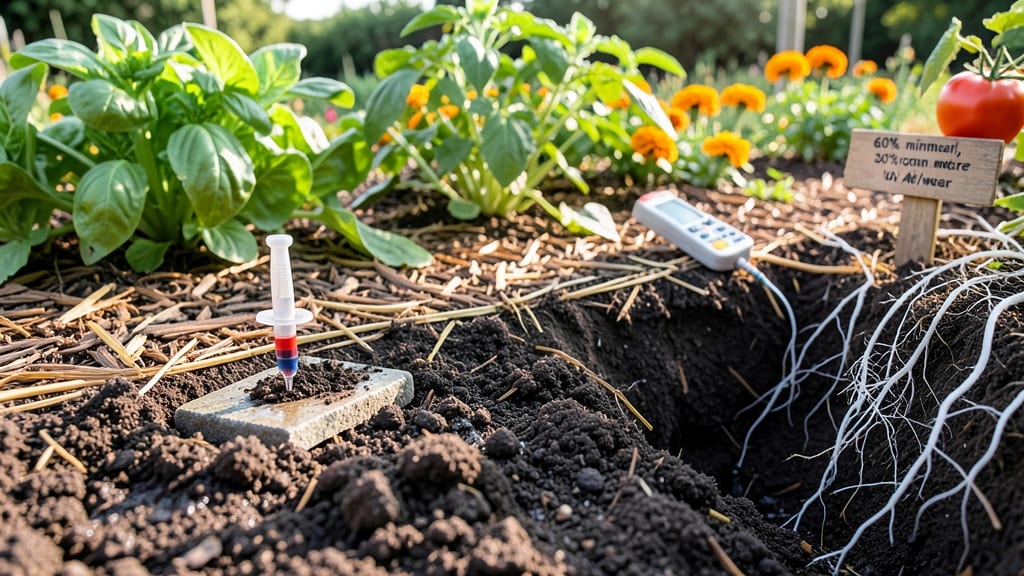
The ideal soil for plant growth balances drainage, aeration, and nutrient retention, typically featuring a loamy texture with a pH between 6.0 and 7.0, though specific plants vary—acid-loving azaleas thrive at 4.5–5.5 while succulents need fast-draining, alkaline soil. Organic matter like compost enhances fertility and structure.
Soil isn't just dirt—it's a living ecosystem where roots breathe, nutrients dissolve, and water moves. 🌱 The perfect mix depends on your plants: vegetables like tomatoes need well-draining loam with 30% compost for steady moisture, while blueberries demand erica peat to keep pH under 5.0.
Even container gardens benefit from layered mixes, with perlite or vermiculite on top to prevent compaction. Think of it like a recipe: too much sand dries out roots, while heavy clay suffocates them.
Here's the secret most gardeners miss: soil amendments aren't one-size-fits-all. Azaleas need pine fines for acidity, while roses thrive with bone meal for phosphorus. Test your soil first—most home kits cost under $20 and reveal whether you need lime to raise pH or sulfur to lower it.
I always keep a 5-gallon bucket of worm castings handy; they're nature's fertilizer, adding nutrients without burning roots.
💡 In This Article
- How Soil pH, Texture, and Composition Affect Root Development
- Plant-Specific Soil Mixes: Custom Blends for Vegetables, Flowers, and Trees
How soil pH, texture, and composition affect root development
Soil texture determines how water and air move through the root zone. Loam—ideal for most plants—contains 40% sand, 40% silt, and 20% clay, creating a crumbly structure that holds moisture while allowing oxygen flow.
Sand drains too quickly, while clay suffocates roots by trapping water and blocking air pockets. Think of it like a sponge: clay holds too much water, sand lets it all escape, but loam finds the perfect balance. 🌱
The pH scale measures acidity or alkalinity, and it directly controls nutrient availability. At pH 6.0–7.0, most plants can access nitrogen, phosphorus, and potassium efficiently. But drop to pH 5.0 and aluminum toxicity becomes an issue, while pH 8.0 locks out iron and manganese.
For example, blueberries need pH 4.5–5.5 because their roots can't absorb nutrients in neutral soil—this is why they grow best in peat-based mixes.
Root development also depends on soil aeration. Compacted soil reduces oxygen levels, causing roots to suffocate and turn brown. Organic matter like compost improves aeration by creating air pockets as it decomposes.
I've seen tomato plants double their yield when grown in soil amended with 5% compost—the roots spread deeper and wider, accessing more nutrients. Even heavy clay soils can be improved by adding 2 inches of coarse sand per square foot.
Nutrient availability isn't just about pH—it's also about microbial activity. Healthy soil teems with bacteria and fungi that break down organic matter into plant-available forms. For instance, mycorrhizal fungi form symbiotic relationships with roots, increasing nutrient uptake by up to 80%.
This is why adding worm castings or compost boosts plant health—it feeds these beneficial microbes, which in turn feed your plants.
Texture and pH work together to determine water retention. Sandy soils dry out quickly, while clay holds water too tightly, creating anaerobic conditions. The solution? Mixing organic matter with mineral components creates a loamy texture that holds 30–50% of its weight in water while still allowing excess to drain.
This balance is critical for root health—too much water drowns roots, while too little stresses plants during drought.
One common mistake is assuming all plants need the same soil. Succulents thrive in fast-draining mixes with 50% perlite, while ferns prefer moist, acidic peat moss**. The key is matching soil composition to a plant's natural habitat—desert plants need gritty soil, while tropical plants crave moisture-retentive mixes.
Always check the plant's native growing conditions before amending your soil. 💫