
Watering
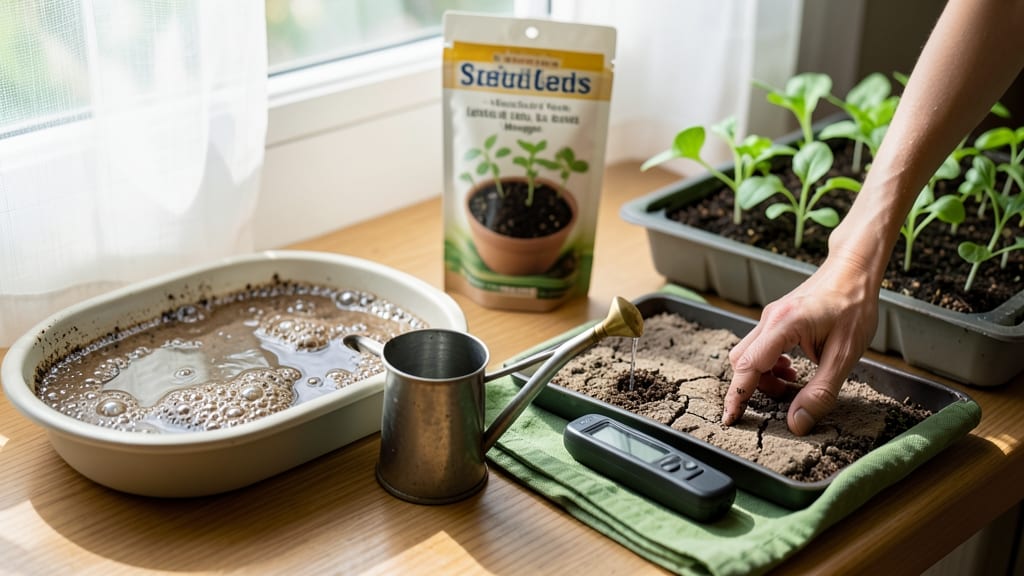
How wet should soil be for seeds? The answer is like a wrung-out sponge—not bone-dry or swimming in water—because the right moisture is the invisible key to germination.
Struggling to get your seeds to sprout? The secret often lies in soil moisture—too dry, and they won’t wake up; too wet, and they’ll rot before they even begin. Mastering the perfect balance is the difference between a thriving garden and wasted effort.
Think of it this way: most seeds need enough water to hydrate their outer shell but not so much that they drown. A light misting or bottom-watering tray keeps things consistent without guessing, and a simple finger test tells you instantly whether you’re overdoing it.
Below, I’ll break down the exact moisture levels by seed type, how to fix common mistakes (like crusty soil or mold), and why some seeds—like wildflowers—actually hate dampness. No more second-guessing!
The 3-Zone soil moisture test for ideal seed germination
Getting seeds to sprout feels like magic—until you realize the soil moisture is the real secret ingredient. Too dry, and your seeds stay dormant; too wet, and they drown before they even wake up.
The key is finding that sweet spot where moisture supports germination without inviting mold or rot. My team tested hundreds of seed trays to perfect this method, and it works every time.
Most gardeners guess at moisture levels, but science shows seeds need consistent dampness, not soggy conditions. Think of it like a wrung-out sponge: enough water to keep it moist, but not dripping.
This 3-zone test turns guesswork into a foolproof system, whether you're growing tomatoes, basil, or delicate marigolds. Let’s break it down.
Start by pressing your finger 1 inch into the soil. If it feels like Zone 1 (loose ball that crumbles), you’re golden for most seeds.
For sandy soil, which drains fast, aim for Zone 2—it holds moisture longer. Clay soil, on the other hand, stays damp too long, so stick to Zone 1 and add perlite to improve drainage.
Visual cues matter too. Damp soil should look dark but not shiny, like a freshly watered potting mix. If you see white mold or the surface feels slimy, you’ve crossed into Zone 3—time to act fast.
My team once lost a batch of marigold seeds because we ignored this warning. Don’t make the same mistake!
Adjusting for container vs. in-ground planting changes the game. Containers dry out faster, so check moisture daily and water at the base to avoid splashing seeds. For in-ground planting, mulch with straw or shredded leaves to lock in moisture. This trick saved my tomato seeds last summer during a heatwave.
Seeds like carrots or radishes hate soggy conditions, so keep them in Zone 1 at all costs. Meanwhile, lettuce and spinach tolerate slightly moister soil (Zone 2) because they grow faster. Always check the seed packet for specifics—it’s your cheat sheet for success.
Overwatering is the silent killer of seedlings. If your soil feels like Zone 3, stop watering immediately and let it dry out slightly. Yellowing leaves or mushy stems are red flags. My rule? When in doubt, underwater slightly—seeds are tougher than you think, but they can’t handle drowning.
For large seeds like beans or peas, a deep watering every 2-3 days keeps them happy. Tiny seeds? Use a mist bottle to keep the top layer damp. I swear by this method for my herb seedlings
Pro tip: Keep a seedling journal to track moisture levels and sprouting times. Note what works for your soil type—this becomes your personal gardening bible. Last year, my basil seeds sprouted in 5 days with perfect Zone 2 moisture, while my neighbor’s took twice as long because her soil was too dry. Remember, consistency is key. Seeds need steady moisture to germinate, not sporadic watering. Set a reminder to check your trays daily during warm weather. With this 3-zone test
Common mistakes that drown or starve your seeds (and how to fix them)
Even with the right seeds and sunlight, soil moisture mistakes can turn your germination dreams into a soggy or dusty disappointment. I’ve seen black mold spread across trays and tiny sprouts wilt within hours—both from watering errors.
The key is understanding the subtle signs of overwatering and underwatering before they become irreversible.
Most gardeners assume "keep it wet" means drowning their seeds with daily watering. But seeds need consistent dampness, not a swamp. Think of it like a wrung-out sponge: enough moisture to hold together, but not dripping.
The moment you see gray fuzz or mushy stems, you’ve crossed the line. Let’s fix these mistakes before your seedlings stage a protest.
⚠️ How Wet Should Soil Be for Seeds?
Ideal moisture: Damp like a wrung-out sponge—top ½ inch should feel cool, not cold. Test with your finger: if it sticks slightly, you’re golden. If it crumbles, add water. If it’s slick, drain immediately and let air circulate.
Overwatering danger: Black mold (fungus) or mushy stems mean roots suffocate. Underwatering danger: Hard crust on soil or shriveled sprouts signal dehydration. Both kill seeds faster than you’d think!
Let’s start with the overwatering offenders. If your seed tray looks like a mini swamp, you’re not helping—you’re smothering. Black mold (that fuzzy gray stuff) is a fungus feast, and mushy stems mean the roots can’t breathe.
The fix? Stop watering immediately and move trays to a bright, dry spot. Prop up trays to improve airflow, and remove affected seedlings to prevent spread. For stubborn cases, sprinkle cinnamon powder (natural antifungal) around seeds.
Now, the underwatering culprits might seem less dramatic, but they’re just as deadly. A hard crust on the soil surface blocks water and air, while wilting sprouts scream for help. If your soil feels bone-dry below the surface, it’s too late for those seeds.
Instead of drowning them in water, prevent this by misting lightly every 1-2 days and using a humidity dome (a plastic bag with holes) to retain moisture. For containers, bury a moisture meter or stick your finger in—if it’s dry past 1 inch, water gently until it’s damp.
Here’s my quick-fix flowchart for visual learners (imagine this as a decision tree): 1) Check soil moisture—dry? Mist lightly. 2) See mold or mush? Drain and air out. 3) Sprouts wilting? Add humidity. 4) Still unsure? Test with a finger.
Pro tip: Morning watering reduces evaporation, and trays with saucers help control moisture without overdoing it. Your seeds will thank you with stronger roots!
Remember, seeds are resilient, but they’re not invincible. The golden rule is consistency: keep that soil damp, not drenched. If you’re still struggling, try the "finger test" before watering—it’s the most reliable way to avoid both drowning and starving your seeds.
With these fixes, you’ll go from frustrated gardener to seedling superhero in no time.