
Light Requirements
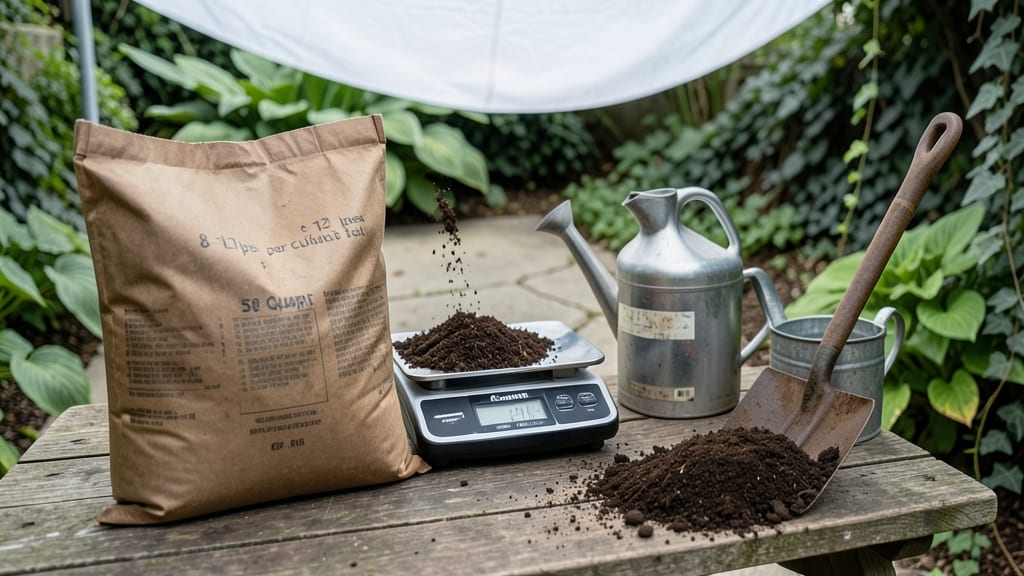
Fifty quarts of potting soil typically weigh between 45 and 60 pounds, depending on moisture content and soil composition—peat-based mixes lean lighter (around 45 lbs), while mineral-heavy blends or those with added perlite can reach 60+ lbs. Always check density labels for precision.
Understanding soil weight helps with everything from delivery costs to container selection. The key factors are moisture levels—damp soil can add 5-10 pounds to your total—and the mix's ingredients. For example, coconut coir blends often weigh more than traditional peat mixes due to their denser structure.
I always recommend weighing a 5-gallon bucket of your chosen soil first to calculate the full 50-quart batch accurately.
Pro tip: Most nurseries sell soil by volume, not weight, so ask for density specs upfront. If you're transporting this yourself, use wheelbarrows with reinforced handles—50+ pounds is heavy! For storage, stackable plastic bins with handles make lifting easier, and they won't degrade like cardboard over time. 💛
💡 In This Article
- Potting Soil Density Factors Affecting Weight
- Practical Tips for Estimating and Transporting 50 Qt of Soil
Potting soil density factors affecting weight
Soil weight varies dramatically based on its composition, and understanding these factors helps you estimate accurately. Organic materials like peat moss or coconut coir compress differently than inorganic additives such as perlite or vermiculite.
For instance, pure peat moss has a density of about 0.25 lbs per quart when dry, but when mixed with 20% perlite (which adds air pockets), the density drops to roughly 0.20 lbs per quart.
This explains why peat-heavy blends often weigh closer to 45 lbs for 50 quarts, while mineral-rich mixes can exceed 60 lbs.
The moisture content is another critical variable—dry soil can weigh 20-30% less than the same volume when saturated. For example, a 50-quart bag of dry potting mix might weigh 40 lbs, but after watering, it could swell to 50+ lbs due to absorbed water.
This is why professional growers always specify "as is" weight versus "saturated" weight on labels. The texture also plays a role: fine, silt-like soils pack more densely than chunky, aerated mixes with bark or compost chunks.
Here's a quick breakdown of how common soil components affect weight per quart:
- Peat moss: 0.20-0.25 lbs (light, fibrous)
- Coconut coir: 0.25-0.30 lbs (denser than peat)
- Perlite/vermiculite: 0.10-0.15 lbs (adds volume, reduces weight)
- Compost: 0.30-0.40 lbs (heavier due to organic matter)
- Sand/grit: 0.40-0.50 lbs (heaviest component)
For a 50-quart mix, these variations mean your total could swing by 10+ pounds depending on the ratio. For example, a blend with 50% peat and 30% perlite would weigh less than one with 30% compost and 20% sand.
Always check the manufacturer's density specifications if precision matters for your project. 🔥
One often-overlooked factor is how soil settles over time. Freshly mixed soil may weigh 5-10% more immediately after blending due to trapped air, but it compacts as you handle or transport it. This is why pre-bagged soil often lists a "settled weight"—a more accurate reflection of what you'll actually lift.
If you're mixing your own, account for this compaction by adding 5-10% extra volume to your calculations.
The science behind this involves porosity—the amount of air space in the soil. Soils with high porosity (like those with perlite) feel lighter because they contain more air, while dense soils (like those with sand) have less air and more solid matter.
This is why a 50-quart bag of "lightweight" potting mix might feel surprisingly heavy when you lift it—it's not just about the ingredients, but how they're structured at a microscopic level. 💫
For gardeners who need consistency, pre-mixed bags with labeled weights are the safest bet. Brands like Miracle-Gro or FoxFarm often include density information on their packaging, helping you avoid surprises during delivery or transport.
If you're buying in bulk, ask for a sample first to test the weight yourself—this simple step can save you from overestimating your carrying capacity!