
Pruning
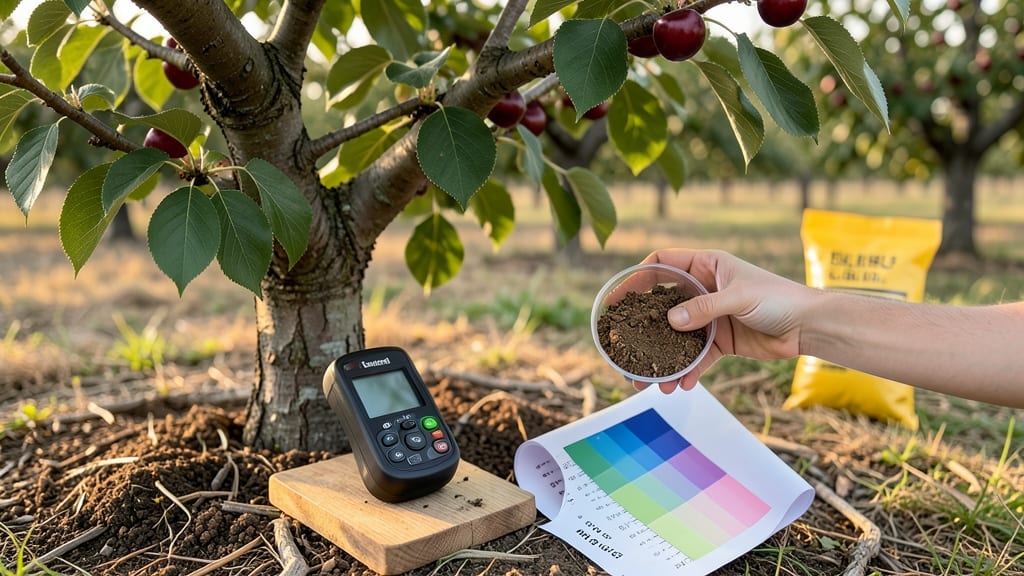
Growing a cherry tree 🌳 with the perfect soil pH is the secret to sweet, juicy fruit that rivals store-bought — and most gardeners get it wrong by ignoring the acidity factor.
Struggling to grow sweet, juicy cherries? The secret might lie in your soil’s acidity—cherry trees thrive in a very specific pH range that most gardeners overlook. Too high or too low, and you’ll end up with bitter fruit or stunted growth, no matter how much you water or fertilize.
In this guide, I’ll break down the ideal soil pH range for cherry trees (yes, sweet and sour varieties have different needs), how to test your soil like a pro, and the exact steps to adjust pH—whether you need to add lime or sulfur.
Spoiler: It’s not as complicated as it seems, and the payoff is worth it.
By the end, you’ll know how to spot pH-related problems before they ruin your harvest, plus regional tweaks for USDA Zone 6a and beyond. Let’s get your cherry tree’s roots in the right balance for a bountiful crop.
The ideal soil pH range for cherry trees (and why it matters)
If you've ever planted a cherry tree hoping for a bountiful harvest, only to watch your fruit stay small or your leaves turn yellow, your soil pH might be the culprit. Cherry trees are finicky about acidity, requiring a precise pH range of 4.5 to 6.5 to thrive.
This narrow window ensures they absorb essential nutrients like iron, zinc, and manganese—nutrients that directly impact fruit sweetness and tree health. Without the right pH, even the hardiest sweet or sour cherry varieties will struggle to produce the luscious fruit you dream of.
Most gardeners assume their soil is "fine" without testing, but regional soil pH can vary dramatically. For example, Pacific Northwest soils often lean acidic naturally, while Midwestern soils tend to be neutral or slightly alkaline.
Even a small deviation—like a pH of 7.0—can lock out critical nutrients, causing chlorosis (yellowing leaves) or stunted growth. Understanding your soil’s pH is the first step to unlocking a cherry tree’s full potential, whether you’re growing Bing cherries or Montmorency sour cherries.
Why does pH matter so much? Because it controls nutrient availability. At a pH of 5.5, iron becomes readily available, but if your soil creeps to 7.0, that same iron binds tightly to soil particles, leaving your tree starved. Sweet cherries often need slightly higher acidity (closer to 5.5–6.0) to develop their signature sugar content, while sour cherries can tolerate a broader range (5.0–6.5). Ignoring this balance isn’t just about aesthetics—it’s about the health and productivity of your entire tree.
Testing your soil’s pH is simpler than you think. A home pH test kit (costing around $10) or a lab test from your local Cooperative Extension Service will give you precise readings.
For a quick at-home check, mix 1 part soil with 2 parts water, stir, and use litmus paper to test the liquid. If your pH is outside the 4.5–6.5 range, don’t panic—adjustments are straightforward, whether you need to lower pH with sulfur or raise it with lime.
The key is acting before symptoms like poor fruiting or leaf discoloration become permanent.
Regional soil pH can throw off even the most well-planned cherry tree care. For instance, Pacific Northwest gardeners often deal with naturally acidic soils (pH 4.5–5.5), which can lead to aluminum toxicity if the pH drops below 5.0. Symptoms include brown leaf tips and stunted roots—problems that mimic drought stress.
Meanwhile, Midwestern soils frequently test neutral or alkaline (pH 7.0+), causing iron deficiency chlorosis, where new leaves turn bright yellow while veins stay green. Without correcting the pH, your tree may produce small, tart cherries instead of the sweet, juicy fruit you’re after.
Adjusting your soil’s pH isn’t just about adding amendments—it’s about long-term maintenance. If your soil tests at 7.0, you’ll need to lower the pH gradually using elemental sulfur or peat moss, applying it in early spring and fall.
Conversely, if your pH is 4.0, pelletized lime can safely raise it over time. The goal is to reach that ideal 4.5–6.5 range without shocking the tree’s roots. Think of it like tuning a guitar—small, precise adjustments make all the difference in the final performance.
One of the most telling signs of pH-related stress in cherry trees is interveinal chlorosis, where leaves turn yellow between the veins while the veins themselves stay green. This classic symptom screams iron deficiency, often caused by a soil pH above 7.0.
Other red flags include poor fruit set (fewer cherries forming) or bitter-tasting fruit, both of which can trace back to nutrient imbalances tied to pH. Even if your tree looks healthy above ground, root health is silently suffering—roots need the right pH
How to adjust your soil pH for cherry tree success (step-by-step)
Your cherry tree’s soil pH is the hidden key to sweet, abundant fruit—most gardeners miss this critical factor. If your cherries taste bland or your tree struggles to thrive, the issue might be soil acidity or alkalinity.
The good news? Adjusting pH is simpler than you think, and I’ll walk you through organic and synthetic methods with precise dosages and timing.
First, test your soil’s pH using a digital pH meter or home test kit (available at garden centers). Cherry trees prefer a slightly acidic range of 4.5–6.5.
If your soil is too alkaline (above 7.0), your tree can’t absorb iron, zinc, or manganese, leading to yellow leaves and poor fruit development. Conversely, overly acidic soil (below 4.5) can lock out calcium and phosphorus, stunting growth.
Lowering pH (For Alkaline Soil)
✅ Pros:
- Elemental sulfur: Slow-release, long-lasting (3–6 months).
- Peat moss: Improves soil structure while acidifying.
- Pine needles: Free, organic, and effective for small adjustments.
❌ Cons:
- Sulfur can burn roots if overapplied.
- Peat moss depletes over time and harms ecosystems.
- Pine needles take 6–12 months to fully acidify soil.
Raising pH (For Acidic Soil)
✅ Pros:
- Garden lime: Fast-acting (1–2 months), precise pH control.
- Wood ash: Free, organic, and rich in potassium.
- Crushed eggshells: Slow-release, improves soil structure.
❌ Cons:
- Lime can raise pH too quickly, shocking roots.
- Wood ash is highly alkaline—use sparingly.
- Eggshells take 3–6 months to break down.
To lower your soil’s pH, start with elemental sulfur—the most reliable method. Apply 1–2 pounds per 100 square feet for alkaline soil (pH 7.0–7.5) and 2–4 pounds per 100 square feet for highly alkaline soil (pH 7.5+).
Work it into the top 6–8 inches of soil in early spring or fall, avoiding direct contact with tree roots. For a gentler approach, mix in 2–3 inches of pine needles or peat moss as mulch.
If your soil is too acidic, pelletized lime is your best bet. Use 5–10 pounds per 100 square feet for soil pH 6.0–6.5 and 10–20 pounds per 100 square feet for pH below 6.0.
Apply in early fall or winter to allow time for the soil to buffer before spring growth. For an organic option, spread 1–2 inches of wood ash around the tree’s drip line (avoid direct contact with the trunk) in small, even layers.
Monitor your soil’s pH every 3–6 months using a test kit. Adjustments are rarely a one-time fix—cherry trees thrive with consistent pH balance. Over time, organic matter like compost or leaf mold can help stabilize pH naturally.
Avoid drastic changes; aim for gradual shifts of 0.5–1.0 pH points per year to prevent root stress. With patience and precision, your cherry tree will reward you with juicy, flavorful fruit for years to come.
🌱