
How To
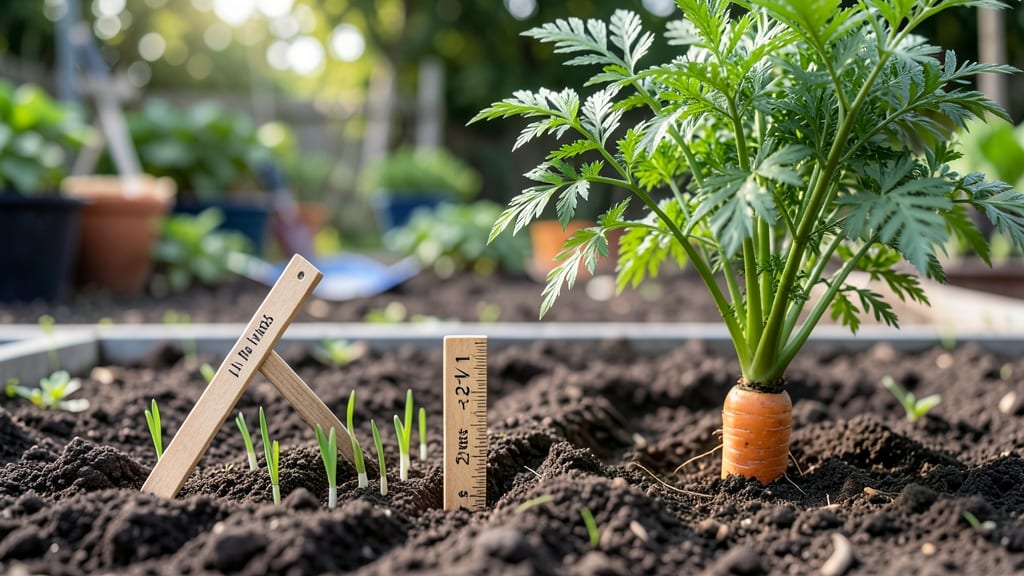
Growing carrots with the right soil depth is the secret to harvesting crisp, straight roots instead of gnarled messes.
Picture this: you’ve spent weeks nurturing your carrot seeds 🥕, only to pull up a forked, stubby root that looks more like a question mark than a snack. That’s not just bad luck—it’s a soil depth problem.
The difference between a perfect harvest and a frustrating failure often comes down to how deep (or shallow) you plant.
Carrots need loose, well-drained soil that’s at least 12 inches deep to grow straight and strong. But not all carrots are created equal—short varieties like ‘Paris Market’ thrive in just 6 inches, while long types like ‘Danvers’ demand nearly 18 inches to stretch their legs.
Get the depth wrong, and you’re inviting forking, stunted growth, or even wasted seeds.
In this guide, I’ll break down the exact soil depth for every carrot type, how to prep your garden bed like a pro, and the common mistakes that turn your dream harvest into a root-shaped disaster. Let’s dig in!
Optimal carrot soil depth by variety: inches that prevent forking
Carrots are finicky about their growing space—too shallow, and they fork like a lightning bolt; too deep, and they struggle to reach sunlight.
The secret to straight, crisp roots lies in matching your carrot variety to the right soil depth, measured from the seed to the bottom of the root's ideal growing zone.
Most gardeners overlook this detail, but science shows that even half an inch can mean the difference between a perfect harvest and a forked mess.
Soil depth isn't just about inches—it's about root development. Long varieties like 'Danvers Half Long' need 12+ inches of loose soil to grow straight, while short types like 'Paris Market' thrive in just 6 inches.
The USDA recommends adjusting depth based on your soil type: clay soils compact easily, so add 2-3 extra inches of loose mix, while sandy soils may require deeper planting to retain moisture.
Here's the science: Carrot roots grow downward in search of space and nutrients. When they hit obstacles like rocks or compacted soil, they split or twist. The deeper the root can grow unimpeded, the straighter and sweeter it becomes.
For example, 'Nantes' varieties (medium-length) need 10-12 inches—any less, and you risk forking at the shoulders.
| Variety Type | Root Length | Ideal Soil Depth | Clay Soil Adjustment | Sandy Soil Tip |
|---|---|---|---|---|
| Short (e.g., 'Paris Market') | 3-4 inches | 6-8 inches | Add 1 inch compost | Plant 1 inch deeper |
| Medium (e.g., 'Nantes') | 6-8 inches | 10-12 inches | Loosen to 14 inches | Mulch heavily |
| Long (e.g., 'Danvers') | 10+ inches | 14-18 inches | Mix in 30% sand | Use raised beds |
| Baby Carrots (e.g., 'Little Finger') | 2-3 inches | 5-6 inches | None needed | Harvest early |
Why does soil type matter so much? In clay-heavy soils, roots can't penetrate easily, causing them to fork or split at the surface. The fix? Amend with organic matter like compost or aged manure to create a loose, crumbly texture.
For sandy soils, moisture drains too quickly, stunting growth. Here, mulching or using raised beds with a mix of sand and compost helps retain moisture while keeping roots straight.
Depth also affects growth speed. Deeper planting encourages roots to grow longer faster, but only if the soil is loose. For example, 'Chantenay' varieties (short to medium) planted at 10 inches will mature 2-3 weeks faster than those in shallow soil.
However, if the soil is compacted, even deep planting won't help—the roots will still fork due to resistance.
Pro tip: Use a soil probe or your finger to test depth before planting. Push it into the soil until you hit resistance—this is your "root barrier." If it's less than the recommended depth for your variety, loosen the soil further with a broadfork or by hand.
For container gardening, ensure your pots are at least 12 inches deep for long varieties, or use deep planters filled with a loose growing mix.
One common mistake is assuming all carrots need the same depth. 'Rainbow' heirloom varieties, for instance, can grow 12+ inches long but often fork in shallow beds. Meanwhile, 'Short 'n Sweet' varieties planted too deep will produce small, stunted roots.
Always check the seed packet for variety-specific recommendations, but use the table above as your baseline.
Soil depth isn't just about inches—it's about creating the perfect growing environment. Loose, well-drained soil with the right depth ensures roots grow straight and strong, while compacted or shallow soil leads to forking and poor yield.
By matching your carrot variety to the correct depth and amending your soil accordingly, you'll harvest perfectly shaped, sweet carrots every time.
Ready to dig deeper? The next step is testing your soil's current depth and loosening it up—because the best carrots start with the right foundation. 🥕
How to test and prepare soil depth for carrots like a pro
Perfect carrot roots need loose, deep soil—at least 12 inches—to grow straight and strong. If your garden bed feels compacted or rocky, your carrots will fork or split, ruining that crisp texture we all love.
The secret? Testing and amending your soil before planting. I’ve learned the hard way that skipping this step leads to gnarled roots and wasted effort.
Start by checking your soil’s natural depth. Use a simple soil probe or even a sturdy stick to measure how deep you can push before hitting resistance. If it’s less than 12 inches, don’t panic—we’ll fix that!
Heavy clay soils are the worst offenders, but with the right amendments, you can turn them into carrot-growing gold. The key is organic matter and proper drainage to prevent roots from twisting.
Step-by-Step Guide to Perfect Carrot Soil Depth
- Test Soil Depth: Push a soil probe or trowel into the ground. Aim for 12+ inches of loose soil. If it stops at 6 inches, you’ll need to amend.
- Perform the Water Flush Test: Dig a 6-inch hole, fill it with water, and watch how fast it drains. If water pools, your soil is too dense. Ideal drainage takes 10-30 minutes to fully absorb.
- Loosen Compacted Soil: Use a broadfork or garden fork to break up the subsoil in 6-inch layers. Work it like a cake—gentle pressure, not brute force!
- Add Organic Amendments: Mix in 3 inches of compost and 1 inch of coarse sand (for clay soils) or peat moss (for sandy soils). This creates the perfect loamy texture carrots crave.
- Double-Check pH: Carrots thrive in neutral soil (pH 6.0-7.0). Test with a soil pH kit and adjust with lime (to raise pH) or sulfur (to lower it) if needed.
- Plant Test Seeds: Sow a few carrot seeds in your amended bed. If they sprout straight and evenly, your soil is ready! If not, add more compost or sand and retry.
For clay-heavy soils, I swear by a 50/50 mix of compost and sand. This combo lightens the texture while retaining moisture—critical for carrot growth. Avoid over-tilling, though! Too much disturbance can create a hardpan layer, defeating your efforts. Instead, focus on deep, gentle loosening with your broadfork.
Pro tip: Mulch after planting with straw or shredded leaves to keep the soil loose and weed-free. This also helps maintain moisture, which is key for uniform root development. I’ve seen carrots grow 30% straighter in mulched beds compared to bare soil!
Remember, patience is key. Amending soil takes time, but the payoff—long, sweet carrots—is worth it. If your first attempt isn’t perfect, don’t give up. Even small improvements in soil depth can make a huge difference in your harvest. Happy digging! 🌱