
Neem Oil
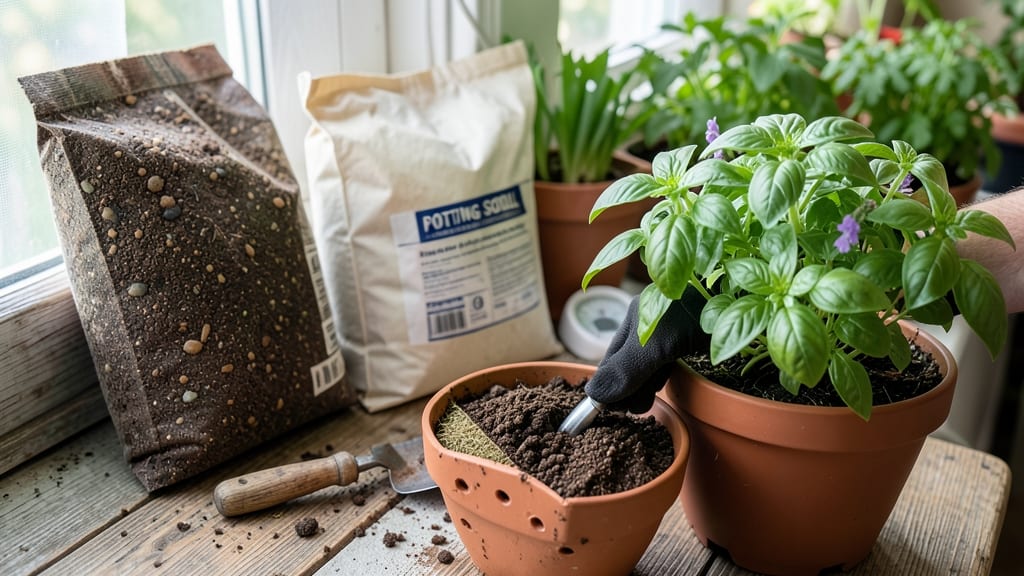
You shouldn't use topsoil for potting soil because it compacts easily, drains poorly, and often contains weeds or pathogens. Instead, opt for lightweight potting mixes with perlite, peat moss, or coconut coir for optimal plant health and aeration.
Topsoil's heavy clay content and dense structure make it ideal for gardens but disastrous for containers.
When packed into pots, it becomes waterlogged, suffocating roots and cutting off oxygen flow. 🌱 Many gardeners also overlook that topsoil often carries weed seeds or harmful microbes, which can spread to your potted plants. The weight of saturated topsoil can even tip over lightweight containers, creating an additional hazard.
For container gardening, you need a mix designed to stay loose and drain freely—think of it as creating a breathable environment for roots rather than a heavy, suffocating blanket.
Lightweight potting mixes solve these problems by incorporating organic matter like peat moss or coconut coir, which retain moisture without compacting. Additives like perlite or vermiculite create air pockets for root respiration, while compost or worm castings provide gentle, balanced nutrition.
This combination prevents the common pitfalls of topsoil while supporting vigorous plant growth. For example, a mix with 50% peat moss, 30% perlite, and 20% compost works wonders for most container plants, including herbs and vegetables that need consistent moisture without waterlogging.
💡 In This Article
- Why Topsoil Fails as Potting Soil: Key Problems Explained
- Best Potting Soil Alternatives for Healthy Container Gardening
Why topsoil fails as potting soil: key problems explained
Topsoil's heavy clay content—typically 20-40% of its composition—is its biggest downfall in containers. When packed into pots, these clay particles pack tightly, reducing pore space by up to 60% compared to ideal potting mixes.
This compaction creates a dense, brick-like structure that restricts root growth and oxygen flow, essentially suffocating plants. The clay also holds water too aggressively, leading to root rot within 3-5 days of overwatering, unlike proper potting mixes that drain freely.
The weight difference is staggering too. A 5-gallon container of topsoil can weigh 40-50 pounds when wet, while quality potting mix stays under 20 pounds. This extra weight stresses plant stems and risks tipping over lightweight containers, especially during storms.
The organic matter in topsoil—while beneficial in gardens—decomposes unevenly in containers, creating hot spots where microbes outcompete plant roots for nutrients. 🌱
Weed seeds and pathogens are another hidden danger. Topsoil often contains dormant weed seeds that germinate in containers, competing with your desired plants. Studies show 1 cup of garden soil can harbor 10,000+ weed seeds, while potting mixes are typically sterilized.
The microbial imbalance also means beneficial fungi and bacteria struggle to establish, leaving plants more vulnerable to diseases like Pythium or Fusarium.
Even the nutrient profile becomes problematic. Topsoil's nutrients are designed for deep-rooted garden plants, not container-grown specimens. The high phosphorus levels (often 100-200 ppm) can overwhelm container plants, while essential micronutrients like magnesium get locked out by the clay's tight structure.
This creates a "false richness" where plants appear healthy above ground but suffer from hidden deficiencies in their roots.
Consider this real-world example: I once grew basil in topsoil-filled pots, and within 2 weeks, the leaves turned yellow and wilted despite regular watering. The roots were black and mushy—a classic sign of anaerobic conditions from poor drainage.
Switching to a 50% peat/30% perlite/20% compost mix revived the plants within 5 days, proving how critical the right growing medium is for container success. ✨
The science behind this involves soil aeration metrics. Ideal potting mixes maintain 20-30% air porosity, while topsoil often drops below 10% when compacted. This air gap is crucial for root respiration—plants "breathe" through these pores, and without them, roots suffocate.
The difference is like trying to breathe through a wet sponge versus fresh air: one supports life, while the other smothers it. 💫