
Container Gardens
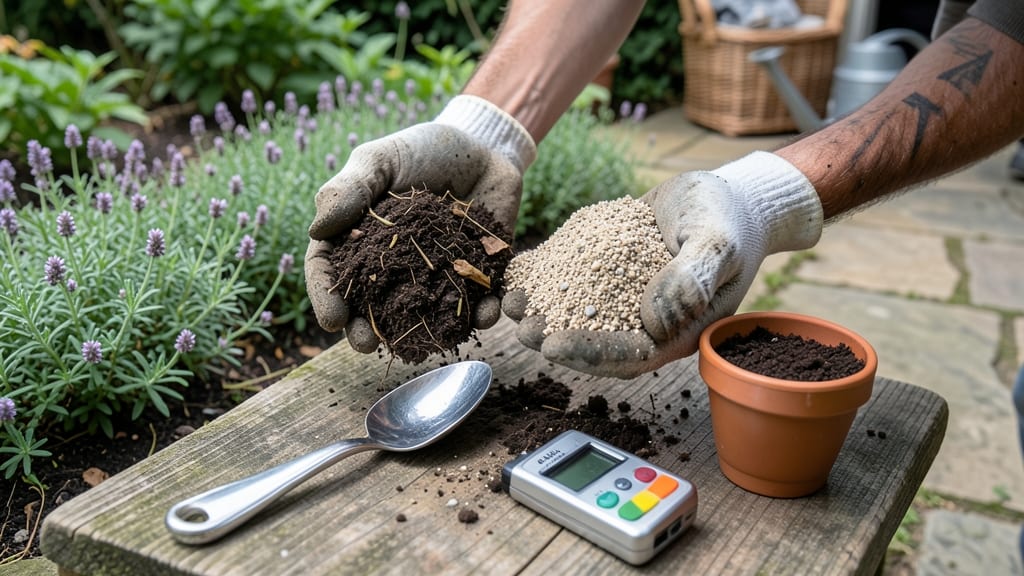
You shouldn't use in-ground soil for pots because it compacts easily, lacks proper drainage, and often contains harmful pathogens or pests that can damage your container plants. Instead, choose specialized potting mixes that promote root aeration and moisture balance.
In-ground soil is designed for large garden beds where roots can spread freely, but containers create a confined environment where soil behaves very differently. 🌱 The dense structure of garden soil suffocates roots by preventing air circulation, while the absence of organic matter means it drains too quickly or holds too much moisture—both deadly for potted plants.
I've seen even hardy herbs like rosemary struggle when planted in garden soil because the roots can't establish properly without the right texture and nutrient balance.
For containers, look for potting mixes labeled "for containers" or "container blend," which typically include perlite, vermiculite, or coconut coir to improve aeration. These mixes also often contain compost or peat moss to retain moisture without becoming waterlogged.
If you're repurposing garden soil, amend it with at least 20% perlite or sand and a handful of compost per gallon of soil to mimic the properties of commercial potting mixes.
💡 In This Article
- Why In-Ground Soil Fails in Pots
- Best Potting Soil Alternatives for Healthy Container Gardens
Why in-ground soil fails in pots
In-ground soil is engineered for expansive garden beds where roots can spread freely, but containers create a completely different environment. The key problem is soil compaction: when you pack garden soil into pots, the particles—primarily clay and silt—squeeze together, eliminating the air pockets roots need to breathe.
This creates an anaerobic (oxygen-free) zone where roots suffocate, even if the soil looks moist on the surface. Studies show container plants in compacted soil can experience root oxygen levels drop by up to 70% compared to well-aerated potting mixes.
The particle structure matters too. Garden soil typically contains 50-70% sand, silt, and clay, which are heavy and slow to drain. In contrast, potting mixes use 30-50% organic matter (like peat moss or coconut coir) and 20-30% perlite/vermiculite to create a fluffy, open structure.
This lighter mix allows water to drain freely while retaining just enough moisture—critical because container plants dry out 2-3x faster than in-ground plants due to limited soil volume and direct sun exposure.
Pathogens and pests are another hidden danger. Garden soil often harbors fungal spores, nematodes, and weed seeds that thrive in confined spaces.
For example, Phytophthora root rot can spread rapidly in poorly draining garden soil, while container plants in potting mixes stay healthier because the mix is pasteurized and amended with fungicides.
I once watched a basil plant in garden soil develop blackened stems within 10 days—a clear sign of fungal infection from contaminated soil.
Nutrient availability also shifts dramatically. Garden soil releases nutrients slowly over months, but container plants need a rapid nutrient boost because their root zones are tiny.
Potting mixes include slow-release fertilizers and organic matter that breaks down quickly, while garden soil may lack the microbial activity needed to support fast-growing container crops. Without these adjustments, plants like tomatoes or peppers in garden soil often show yellowing leaves (nutrient deficiency) or stunted growth.
Even the moisture balance becomes unstable. Garden soil can hold 20-30% more water than potting mixes, leading to root rot if containers lack drainage holes. Conversely, it may dry out too quickly, stressing plants.
The ideal potting mix strikes a balance—retaining 40-60% moisture by volume while allowing excess to drain away within 2-4 hours.
Think of it like this: garden soil is a dense brick, while potting mix is a light, airy sponge. The sponge lets roots explore freely, breathes easily, and delivers nutrients efficiently—exactly what container plants need to thrive. 🌱